European countries progress with Common Armoured Vehicle System programme
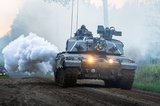
CAVS is an armoured off-road system based on the Patria 6x6 chassis (Photo: FMV)
Sweden has placed an order for 20 Patria CAVS armoured vehicles, with Germany officially joining the collaborative effort by signing a technical agreement.


The need to improve mobility and protection of ground forces alongside recognising the advantages of joint procurement have been pushing more European countries towards joining the Common Armoured Vehicle System programme (CAVS).
This week, as Sweden placed an order for 20 Patria CAVS, Germany officially joined the collaborative effort.
German authorities signed a statement of intent in June 2022 and endorsed the country’s participation on 17 April through a technical arrangement.
Approached by Shephard, the German MoD would not disclose details on the number of platforms Berlin intends to acquire under the CAVS effort as well as how
Our news & analysis is now part of Defence Insight®
A Basic-level or higher Defence Insight subscription is now required to view this content.


More from Land Warfare
-
![Europe commits to long-range fires but countries move in different directions]()
Europe commits to long-range fires but countries move in different directions
Sweden, Croatia and France are pursuing different rocket artillery solutions as European armies seek greater reach, survivability and industrial resilience.
-
![MAAF to test Britain’s shift from armour to distributed lethality in Estonia]()
MAAF to test Britain’s shift from armour to distributed lethality in Estonia
The bilateral agreement between the UK and Estonia comes as both countries explore how dispersed troops, drones, digital targeting, anti-tank weapons and increasingly long-range fires can complement the combat mass traditionally provided by heavy armour.
-
![Polaris expands Arctic mobility offering as US military orders grow]()
Polaris expands Arctic mobility offering as US military orders grow
The Military 850 Voyageur 155 Crossover has secured orders from the US Army, Air Force and Marine Corps, addressing demand for agile Arctic mobility with passenger, cargo and towing capacity.