Deftech displays proof-of-concept vehicle for improved Malaysian Army ACV-300 Adnan AFV
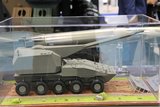
Deftech's PoC vehicle for the improved ACV-300 Adnan AFV. The Malaysian government has given funding approval for 60 vehicles to undergo the programme. (Photo: Dzirhan Mahadzir)
The ACV-300 Adnan Armoured Fighting Vehicle (AFV) is a Malaysian variant of the FNSS ACV-15 and was the result of a collaboration between FNSS and Malaysian company DRB-Hicom Defence Technologies (Deftech).


Malaysian company Deftech displayed its proof of concept (PoC) vehicle for the Malaysian Army’s ACV-300 Adnan AFV Service Life Extension Programme (SLEP) at the Defence Services Asia 2024 exhibition held in Kuala Lumpur.
On 7 December 2023, Defence Minister Mohamad Hasan stated in parliament that the government had approved a life extension programme for 60 ACV-300s though he gave little further details beyond that.
The Malaysian Army ordered a total of 267 ACV-300s from Deftech and manufacturer FNSS with an initial order of 211 vehicles in 10 variants in 2000 and a second batch of 56 in 2008. The SLEP
Our news & analysis is now part of Defence Insight®
A Basic-level or higher Defence Insight subscription is now required to view this content.



More from Land Warfare
-
![Europe’s eastern flank moves on air defence radars with wider efforts also underway]()
Europe’s eastern flank moves on air defence radars with wider efforts also underway
Air defence radars have become more important assets in the past year with incursions in NATO countries on Europe’s eastern flank highlighting the need.
-
![Australia’s SM-2 land trial could reshape ADF medium-range air defence plans]()
Australia’s SM-2 land trial could reshape ADF medium-range air defence plans
The first ground launch of the SM-2 could offer Canberra a path to expand its missile defence capability by adapting systems already fielded across the ADF.
-
![UK hits pause on deployable mortar system procurement as US begins search]()
UK hits pause on deployable mortar system procurement as US begins search
The US Army's market survey into available 81mm and 120mm mobile mortar systems was launched only a few days after the UK suspended Project Stokes, an almost identical plan, “pending future decisions on prioritisation, resourcing and funding”.