


Canada accelerates uncrewed aerial system procurement for NATO and Arctic forces
Canada plans to acquire at least 120 uncrewed aerial systems through two competitions with combined funding ceilings of C$32 million.


Revision, a leading developer and manufacturer of ballistic protective eyewear for defence agencies and armed forces worldwide has secured a contract with the Canadian Department of National Defence (DND) to supply its Land Forces with the Desert Locust and Bullet Ant Goggle Systems. The initial contract is to supply 50,000 Desert Locust kits, 10,000 Bullet Ant kits and 50,000 additional lenses in 2011, with a five year option period. This follows Revision’s contract to supply protective eyewear to the Ministry of Defence for British troops in Afghanistan.
The contract also includes an option for specialty lenses such as laser and high-contrast capability. Revision’s Desert Locust and Bullet Ant Goggles were selected for their superior performance, excellent ballistic and optical properties, and their environmental and chemical testing performance.
This is Revision’s second major contract with the DND this year; in January, the company was awarded the Air Force Ballistic Eyewear (BEW) contract for 33,000 eyewear kits and 40,000 additional lenses.
‘Revision is proud to receive the Canadian Army Goggle contract,’ said Jonathan Blanshay, CEO of Revision. ‘Today’s soldier must be ready for any number of threats, including laser. That’s why we’re pleased to supply Canadian Land Forces with the best defence against ballistic impact, the elements as well as laser radiation.’
Revision’s Desert Locust Goggle combines the best ballistic protection and widest field-of-view with optimal fit, making this the ultimate goggle for extended use. The Bullet Ant Goggle System provides powerful ballistic protection in a compact, versatile form. Its low-profile design is highly compatible with operator equipment including Night Vision Goggles.
Both products provide superior ballistic protection, exceeding stringent Canadian performance specifications, ANSI Z87.1-2010 and US military ballistic impact requirements (MIL-DTL-43511D, clause 3.5.10).
Revision develops and delivers purpose-built protective soldier equipment for use by military and security services. The company, which began with eyewear, has expanded to face and head protection and continues to develop its capabilities for integrated, performance-enhancing soldier systems. Revision brings the most advanced expertise, state-of-the-art facilities and finest technical minds. Clients include the US Department of Defense, the Canadian Department of National Defence, the Netherlands Defence Materiel Organization, the Swiss Federal Department of Defence and the UK Ministry of Defence.
Source: Revision


Canada plans to acquire at least 120 uncrewed aerial systems through two competitions with combined funding ceilings of C$32 million.
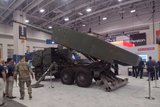
New counter-drone technologies, autonomous launchers and manufacturing modernisation initiatives highlighted emerging opportunities for defence suppliers, while the UK advanced a major military vehicle procurement programme.

Non-US companies are increasingly looking to establish subsidiary and partnerships to access the potential billions of dollars of vehicle and land systems contracts and there has already been some success.
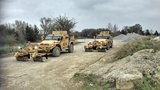
Pearson Engineering has provided equipment and engineering expertise to the Armed Forces of Ukraine since the beginning of the full-scale Russian invasion in 2022. The British company is now working to deepen engagement with the Ukrainian defence industry, expanding its support for the country’s population and laying the foundations for future technological innovation.
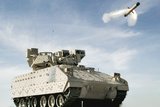
Rather than developing entirely new weapons, defence companies are looking to build on existing weapons and systems to deliver greater capability, control costs and accelerate fielding.

With a production rate of more than 10 million vehicles annually, the US commercial car and vehicle manufacturing base is second only to China. Defence companies are looking at how the vehicles, technology and manufacturing capability can support programmes.

Connect with us on socials


