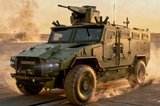
Singapore Airshow 2026: ST Engineering’s Terrex s5 highlights hybrid power’s role in future warfare
Hybrid-electric drive technology may address the growing energy demands of land warfare in future.
Canadian Special Forces effects will be in regular demand over the coming years and the service is planning ahead to ensure they can provide them.
CANSOFCOM commander, Brig Gen Michael Rouleau stated that a ‘sustainable enterprise’ is needed to deliver the capabilities required and that this has been the focus of a recent year-long exercise to study what Canada’s SOF need.
Speaking at an IISS conference, Rouleau said the result of this study was a strategic plan that was tabled in June.
In it CANSOFCOM identifies ways in which the organisation is developing.
In terms of equipment, he recognised that
Already have an account? Log in
Hybrid-electric drive technology may address the growing energy demands of land warfare in future.
The Common Armoured Vehicle System is continuing to rack up orders as the British Army looks likely to become an operator of the vehicle, while Italy and Ireland are also contenders.
As the US Department of Defense looks to counter the growing threat of uncrewed aerial systems to improve homeland security, the DroneHunter acquisition could point to future commercial innovation.
The selection of Hanwha’s K239 Chunmoo long-range precision fires system, with a contract expected to be signed on 30 January, makes Norway the second European country to choose the system. It is expected an operational system will be in service within four years.
This year has begun with main battle tanks taking the lead while orders for large logistics and support vehicles continued from last year. Additionally, two of the British Army’s most significant contracted vehicle programmes, Ajax reconnaissance vehicle and Challenger 3 tank, continued to make news in January.
Canada is improving its Leopard main battle tank fleet but before this is fully completed, it is expected to begin looking for new vehicles.