Boxer joins the German Armed Forces
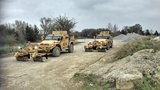
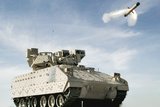
The Boxer armoured transport vehicle is being produced under a bi-national programme. (Photo: Rheinmetall)
Artec GmbH has completed the final delivery of the Boxer armoured vehicles to the German Armed Forces.


Artec Gmbh has delivered the last of the Boxer armoured transport vehicles to the German Federal procurement agency and Ministry of Defence.
The contract for the second batch, which was concluded in December 2015, comprised 131 GTK Boxers and was worth €478 million.
All the experience gained with modifications from the successful Afghanistan mission have been incorporated into this A2 version.
In total, the two parent companies of Artec GmbH have delivered 405 Boxer vehicles to the Bundeswehr, including 72 Boxers in the ambulance variant, 65 command vehicles and 256 infantry group vehicles.
The combat upgrade commissioned by the Bundeswehr in 2017 provides for all Boxer vehicles to be adapted to the A2 design standard.
In 2021 the corresponding upgrade of the second batch of Boxer command vehicles to the A2 standard was contracted. By 2024 all 65 German Boxer command vehicles will be available with full upgrades.
According to Shephard Defence Insight, Boxer’s modular construction allows a range of mission-specific variants, while a protection system against mines, IEDs and ballistic threats contributes to crew survivability.
Artec GmbH was founded in 1999 as a joint venture between Krauss-Maffei Wegmann and Rheinmetall.
Related Equipment in Defence Insight



More from Land Warfare
-
![Canada accelerates uncrewed aerial system procurement for NATO and Arctic forces]()
Canada accelerates uncrewed aerial system procurement for NATO and Arctic forces
Canada plans to acquire at least 120 uncrewed aerial systems through two competitions with combined funding ceilings of C$32 million.
-
![Front-line support: how UK industry is helping tackle Ukraine’s landmine challenges]()
Front-line support: how UK industry is helping tackle Ukraine’s landmine challenges
Pearson Engineering has provided equipment and engineering expertise to the Armed Forces of Ukraine since the beginning of the full-scale Russian invasion in 2022. The British company is now working to deepen engagement with the Ukrainian defence industry, expanding its support for the country’s population and laying the foundations for future technological innovation.
-
![AUSA 2026: companies adapt munitions and missiles for greater effect at lower costs]()
AUSA 2026: companies adapt munitions and missiles for greater effect at lower costs
Rather than developing entirely new weapons, defence companies are looking to build on existing weapons and systems to deliver greater capability, control costs and accelerate fielding.
-
![AUSA 2026: industry looks to make commercial platforms a military reality]()
AUSA 2026: industry looks to make commercial platforms a military reality
With a production rate of more than 10 million vehicles annually, the US commercial car and vehicle manufacturing base is second only to China. Defence companies are looking at how the vehicles, technology and manufacturing capability can support programmes.