


Canada accelerates uncrewed aerial system procurement for NATO and Arctic forces
Canada plans to acquire at least 120 uncrewed aerial systems through two competitions with combined funding ceilings of C$32 million.


American Technologies Network (ATN) has introduced a new multi-purpose ATN NVG-7 series of night vision goggles (NVGs) designed to operate as a hand-held, head-mounted or helmet-mounted night vision device.
The single-tube NVG is built around a high-grade 18mm Gen 2+ or Gen 3 Image Intensifier Tube and uses a binocular style design for convenience. Lightweight and compact, the NVG-7 is housed in a durable body and has a built-in IR light source for close-up illumination in total darkness. Other features include auto-brightness, bright source shut-off and an adjustable interpupillary distance. The system is water and fog resistant and the all-glass optics are multi-coated to provide brilliant clarity with no distortion.
The ATN NVG-7 series is available in 1X with 3X, 5X and 8X optional lenses available. It comes with a flip-up head mount assembly, brow pads, eye cups, day light filter, manual, lens tissue and one 3V lithium CR123A battery in a soft carrying case. The NVG-7 series is available as Gen 2+ or CGT, HPT, Gen 3, Gen 3A, Gen 3P and WPT models.
The new series is designed for the law enforcement, security and marine markets.


Canada plans to acquire at least 120 uncrewed aerial systems through two competitions with combined funding ceilings of C$32 million.
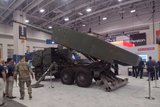
New counter-drone technologies, autonomous launchers and manufacturing modernisation initiatives highlighted emerging opportunities for defence suppliers, while the UK advanced a major military vehicle procurement programme.

Non-US companies are increasingly looking to establish subsidiary and partnerships to access the potential billions of dollars of vehicle and land systems contracts and there has already been some success.

Pearson Engineering has provided equipment and engineering expertise to the Armed Forces of Ukraine since the beginning of the full-scale Russian invasion in 2022. The British company is now working to deepen engagement with the Ukrainian defence industry, expanding its support for the country’s population and laying the foundations for future technological innovation.
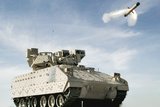
Rather than developing entirely new weapons, defence companies are looking to build on existing weapons and systems to deliver greater capability, control costs and accelerate fielding.

With a production rate of more than 10 million vehicles annually, the US commercial car and vehicle manufacturing base is second only to China. Defence companies are looking at how the vehicles, technology and manufacturing capability can support programmes.

Connect with us on socials


