Aselsan conducts first firing of Göktan ground attack system
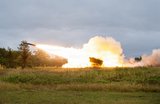
A Delta-V rocket carried the Tolun missile which successfully deployed its wings after separation. (Photo: Aselsan)
The Göktan ground-based precision strike system provides engagement through integrated command-and-control (C2) and fire control systems, enabling mission planning and optimised firing sequences.


Aselsan has conducted the first live-fire test of its Göktan ground attack system which saw the launch of a Tolun munition from a Delta-V rocket and, according to the company, “achieved pinpoint accuracy”.
Göktan is designed to provide ground-to-ground attack and the Tolun munition, originally designed as an air-launched ground attack weapon, was modified to fit with the ground-based system.
The test validated the adaptation of Tolun to a ground-launched configuration, expanding its operational flexibility and demonstrating its capability for long-range strikes.
Developed in collaboration with Delta-V, the Göktan system enhances precision engagement through integrated C2 and fire control systems, enabling mission planning and optimized firing sequences.
According to the company, after separation the Tolun munition transitioned into a guided flight mode before striking its designated target with pinpoint accuracy. This test was supported by Göktan’s 360° firing capability, allowing engagement of critical targets without platform manoeuvring.
The system also supports waypoint-defined targeting, independent and centralised operation modes, multi-target engagement and sequential firing, ensuring high effectiveness in dynamic combat environments.
Aselsan president and CEO Ahmet Akyol said: “We have reached a key milestone in equipping Tolun with ground-launch capability. As we continue to develop force-multiplier systems, this advancement enhances Türkiye’s precision-strike capabilities and expands its operational flexibility.”

More from Land Warfare
-
![Front-line support: how UK industry is helping tackle Ukraine’s landmine challenges]()
Front-line support: how UK industry is helping tackle Ukraine’s landmine challenges
Pearson Engineering has provided equipment and engineering expertise to the Armed Forces of Ukraine since the beginning of the full-scale Russian invasion in 2022. The British company is now working to deepen engagement with the Ukrainian defence industry, expanding its support for the country’s population and laying the foundations for future technological innovation.
-
![AUSA 2026: industry looks to make commercial platforms a military reality]()
AUSA 2026: industry looks to make commercial platforms a military reality
With a production rate of more than 10 million vehicles annually, the US commercial car and vehicle manufacturing base is second only to China. Defence companies are looking at how the vehicles, technology and manufacturing capability can support programmes.
-
![With changing patterns in Middle Eastern procurement, is Europe missing out?]()
With changing patterns in Middle Eastern procurement, is Europe missing out?
Traditional suppliers are struggling to meet the Middle East’s armoured vehicle modernisation needs, creating opportunities for South Korean manufacturers and regional defence industries.
-
![AUSA 2026: CUAS market expands as suppliers target new threats and operational requirements]()
AUSA 2026: CUAS market expands as suppliers target new threats and operational requirements
New developments from MARSS, MyDefence, Mountain Horse Solutions and Rafael suggest that future counter-drone protection will increasingly depend on combining advanced detection, rapid interception and integrated defensive networks.