Qatar signs MoU for coastal missile system
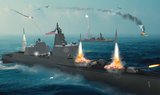
MBDA has signed a Memorandum of Understanding (MoU) to provide a coastal defence system to the Qatar Emiri Naval Force (QENF), it announced on 30 March. The agreement is expected to pave the way for a $724 million contract for the company.
These systems are capable of deploying two different munitions – the Marte ER missile and Exocet MM40 Block 3 anti-ship missile.
The system can work by data-linking to a higher level within a wider coastal surveillance network or in autonomous mode with its own radar. QENF will use the missile systems to monitor maritime coastal traffic and engage hostile ships threatening their territorial waters.
The Exocet MM40 Block 3 missile is the latest-generation ship-borne version of the Exocet family in service with several navies. It provides enhanced operational performance and technology upgrades, with a mission planning software module that automatically computes engagement plans to support firing decisions.
The MARTE ER is a third-generation member of the MARTE family of missile systems, derived from the MARTE Mk2/S that is already in service with the Italian Navy on its NFH90 and AW101 helicopters. The ER features a turbo engine in place of the rocket motor used in the Mk2/S. It has a sea-skimming flight profile and mid autonomous mid-course guidance.
Antoine Bouvier, chief executive officer, MBDA, said: ‘This MoU represents the first step towards the signing of a contract for this new and innovative coastal missile system. This is a further confirmation of the trust placed by the Qatar Armed Forces in MBDA for its defence requirements.’





More from Naval Warfare
-
![FNSS looks to put uncrewed vehicles at the front of amphibious assaults]()
FNSS looks to put uncrewed vehicles at the front of amphibious assaults
The new platform is designed to put reconnaissance, obstacle clearance and fire support ahead of the crewed force in a contested landing.
-
![US turns to allies to tackle navy shipbuilding backlog]()
US turns to allies to tackle navy shipbuilding backlog
A White House memorandum acknowledges US Navy shipbuilding backlogs and a weakened industrial base, opening a formal path for South Korean and Japanese yards to help rebuild capacity.
-
![US Navy’s $275 billion BBGN plan hinges on shipyard transformation]()
US Navy’s $275 billion BBGN plan hinges on shipyard transformation
The US Navy’s planned nuclear-powered warship carries a US$275 billion price tag, but the greater story lies in the industrial overhaul needed to build it, from AI-enabled design to digital twins and modular construction.