Qatar, MBDA sign coastal defence contract


MBDA will supply a coastal defence system for the Qatari Emiri Naval Forces (QENF) under a contract signed on 1 September. The contract formalises an agreement signed in March.
The system will give the QENF greater capabilities to prevent hostile ships from reaching and threatening its territorial waters.
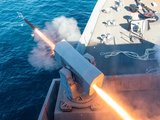
Defences will be based on two different missile types, the Extended Range version of the Marte missile (Marte ER) and the Exocet MM40 Block 3.
The missile system will be able to work in autonomous mode with its own radar, or by data-linking to a higher level within a wider coastal surveillance network.
Antoine Bouvier, CEO, MBDA, said: ‘I am delighted that Qatar has confirmed the trust placed in MBDA for its defence requirements, just a few months after signing the memorandum of understanding during DIMDEX exhibition.'

More from Naval Warfare
-
![US Navy to develop an undersea networking capability to support UUV operations]()
US Navy to develop an undersea networking capability to support UUV operations
The NEREUS project aims to enhance and expand the US Navy’s existing communications systems, enabling crewed/uncrewed seabed and subsurface missions.
-
![How the Hedge Strategy will impact the US Navy’s future capabilities]()
How the Hedge Strategy will impact the US Navy’s future capabilities
The US Navy Hedge Strategy is intended to provide a lethal, modular and cost-effective fleet while accepting Washington’s fiscal and industrial constraints.
-
![US Navy and Raytheon explore additional applications for Mk 58 CRAW torpedo]()
US Navy and Raytheon explore additional applications for Mk 58 CRAW torpedo
Designed as an anti-torpedo and anti-submarine capability, the USN and RTX foresee the Compact Rapid Attack Weapon’s potential for deployment from surface ships and aerial and uncrewed platforms.
-
![European navies line up $105.8 billion in unawarded contracts for 2026]()
European navies line up $105.8 billion in unawarded contracts for 2026
France, Germany and Italy lead the way on unawarded naval defence opportunities that could be awarded this year, but across Europe countries are ramping up their spending efforts to face geopolitical challenges.