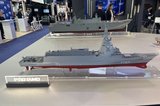
Lockheed Martin details latest Aegis Combat System tests


The Aegis Combat System has recently completed the longest-range engagement ever tested for the Standard Missile-6 (SM-6) as part of a major series of tests for the US Navy’s integrated air and missile defence (IAMD)-equipped USS John Paul Jones (DDG-53).
The tests are part of work to confirm the Aegis Combat System’s capabilities, and validate the system’s accuracy in identifying and destroying threats from beyond the radar horizon.
Three Naval Integrated Fire Control-Counter Air (NIFC-CA) exercises were conducted. The first involved a long-range mission, known as AS-2A, which used data from a non-Aegis system to identify targets in a stressing scenario. The second and third tests, AS-2B and AS-2C, were conducted in increasingly difficult conditions that involved targets at varying altitudes and cross-sections.
Jim Sheridan, director of Aegis US Navy programs, Lockheed Martin, said: ‘NIFC-CA is a game changer for the US Navy because it can be used in collaboration with other systems, to track and destroy approaching cruise missiles at much longer distances than existing technologies can.
‘This validation of the NIFC-CA capability aboard a destroyer comes on the heels of the successful cruiser tests we completed onboard USS Chancellorsville back in August 2013 and we look forward to seeing this capability fielded in the fleet.’
NIFC-CA will complete additional testing throughout 2014 before being deployed on the Theodore Roosevelt Battle Group in 2015.


More from Naval Warfare
-
![Schiebel sees progress in South Korea and Greece despite cautious shipbuilders]()
Schiebel sees progress in South Korea and Greece despite cautious shipbuilders
The Camcopter S-300 remains on track for South Korea and was in the hunt in France, but shipbuilders remain guarded, a cooler mood than at Eurosatory.
-
![US Navy explores 3D-printed parts for Growler, Poseidon and Arleigh Burke destroyers]()
US Navy explores 3D-printed parts for Growler, Poseidon and Arleigh Burke destroyers
USN procurement notices point to potential uses for additive manufacturing in naval aviation and shipbuilding.
-
![Who commands the uncrewed systems when the mothership goes down?]()
Who commands the uncrewed systems when the mothership goes down?
In October 2026, the US Navy sent an uncrewed surface vessel to sea with a carrier strike group for the first time. It is a step forward for hybrid operations, but it raises an awkward question: what happens to the drones if the ship controlling them is lost?
-
![Greece’s $8.1 billion naval pipeline signals opportunities beyond frigates]()
Greece’s $8.1 billion naval pipeline signals opportunities beyond frigates
Defence Insight has identified 14 upcoming Greek naval programmes, with submarine replacement, uncrewed systems and longer-term fleet renewal offering potential opportunities for suppliers.
-
![Navantia pitches 64-cell F110 frigate and sets out plans for 75m autonomous vessel]()
Navantia pitches 64-cell F110 frigate and sets out plans for 75m autonomous vessel
With its second F110 frigate launched four months early, the Spanish shipbuilder is courting allied navies with a missile-defence upgrade and a 75m uncrewed vessel.