Canadian Offshore Patrol Ship contract awarded


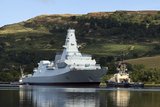
The Public Works and Government Services department of Canada has awarded a contract for six Arctic Offshore Patrol Ships (AOPS) to Irving Shipbuilding, the department announced on 23 January.
Under the contract worth C$2.3 billion ($1.85 billion), the company will construct six AOPS as part of the national shipbuilding procurement strategy.
Construction of an initial block for the first AOPS is scheduled for the summer, while full production will commence in September 2015. Delivery of the first HMCS Harry DeWolf class ship is expected in 2018.
The new DeWolf-class Arctic Offshore Patrol Ships will be equipped with state of the art sensors and will also be able to operate and support the new CH-148 Cyclone naval helicopters. Operating in conjunction with other capabilities of the Canadian armed forces and the Canadian Coast Guard, the DeWolf-class ships will play a critical role in the Atlantic, the Pacific and the Arctic.
The AOPS will have a number of capabilities, including: the ability to operate in first-year ice up to one metre in thickness; the ability to sustain operations for up to four months; command, control and communication capability to exchange real-time information with the armed forces maritime security operations centres; modern surface search radars; and a gun armament.
Related Equipment in Defence Insight

You may also like
More from Naval Warfare
-
![What the rise of interoperability between Western allies means for defence procurement]()
What the rise of interoperability between Western allies means for defence procurement
Major naval initiatives including the European Patrol Corvette programmes and Norway’s UK partnership-focused purchase of Type 26 frigates point to the growing interest in the advantages of commonality across allied navies.
-
![Kraken’s Royal Navy USV contract signals next step in crewed-uncrewed integration]()
Kraken’s Royal Navy USV contract signals next step in crewed-uncrewed integration
The UK Royal Navy’s rapid procurement of uncrewed platforms aligns with the force’s strategic shift towards a fleet better equipped to handle modern threats.
-
![HMS Anson’s milestone stay in Australia cut short during AUKUS deployment]()
HMS Anson’s milestone stay in Australia cut short during AUKUS deployment
The Astute-class submarine’s visit to Australia was the first time maintenance activity on a UK Royal Navy nuclear submarine had been carried out in the country.
-
![How Operation Epic Fury could reduce US readiness to face China]()
How Operation Epic Fury could reduce US readiness to face China
The offensive against Iran could impact training and maintenance cycles and accelerate the degradation of the US arsenal on top of depleting Washington’s stockpiles.
-
![UK Royal Navy explores modular counter-drone capabilities for future hybrid fleet]()
UK Royal Navy explores modular counter-drone capabilities for future hybrid fleet
The UK MoD is scoping out systems to counter the growing threat of uncrewed aerial systems, with a focus on low-cost modularity and speed to field.