Construction of Italy's PPA begins
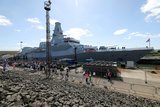
Construction of the Italian Navy's first multipurpose offshore patrol ship (PPA) has commenced at Fincantieri's shipyard in Muggiano, the company announced on 13 February.
This first of seven PPAs will be delivered in 2021. The vessels are being built as part of a wider programme to renew the Italian Navy's fleet that will also include the building of one multipurpose amphibious landing helicopter dock and one logistic support vessel.
The 132.5m PPA is a highly flexible ship with the capacity to serve multiple functions, ranging from patrol with sea rescue to civil protection and front line operations.
There will be different configurations of the vessel's combat system: a 'soft' self-defence version for patrol tasks, and a 'full' version equipped for complete defence. The vessel is also capable of operating high-speed vessels such as rigid hull inflatable boats up to 11 metres long through lateral cranes or a hauling ramp.
The PPAs will be built at the Integrated Shipyard of Riva Trigoso and Muggiano. Following the first delivery in 2021 deliveries will take place in 2022, 2023, 2024 (two units), 2025 and 2026.




More from Naval Warfare
-
![UK Royal Navy explores modular counter-drone capabilities for future hybrid fleet]()
UK Royal Navy explores modular counter-drone capabilities for future hybrid fleet
The UK MoD is scoping out systems to counter the growing threat of uncrewed aerial systems, with a focus on low-cost modularity and speed to field.
-
![US Pentagon claims to have severely damaged Iranian capabilities, promises to increase attacks]()
US Pentagon claims to have severely damaged Iranian capabilities, promises to increase attacks
US military authorities claim to have sunk 20 Iranian vessels and destroyed Tehran’s Air Force, with the Pentagon making plans to send additional assets to the region.
-
![US Navy SPY-6 approaches FRP with Raytheon already having “a hot production line”]()
US Navy SPY-6 approaches FRP with Raytheon already having “a hot production line”
Jen Gauthier, Raytheon’s VP of Naval Systems and Sustainment, told Shephard that the company is awaiting the US Navy’s green light to move “fully into full-rate production”.
-
![How the Golden Fleet will change the US Navy acquisition process]()
How the Golden Fleet will change the US Navy acquisition process
The procurement of the future USN Golden Fleet is planned to be less bureaucratic than previous strategies, involving AI-enabled designs and scheduling tools to increase productivity and avoid delays.