CAMM 3-cell ExLS completes qualification trials


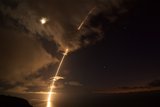
MBDA and Lockheed Martin have completed qualification of MBDA’s Common Anti-air Modular Missile (CAMM) from Lockheed Martin’s Extensible Launching System (ExLS) 3-cell standalone launcher following a series of trials.
ExLS leverages the design and electronics of Lockheed Martin’s Mk 41 Vertical Launching System (VLS).
The compact vertical launch 3-cell ExLS system has been designed specifically for smaller naval platforms that are unable to accommodate the larger 8-cell MK 41 VLS. ExLS is also designed to fit inside the ExLS Host MK 41 launcher, offering flexible, adaptable installation solutions for larger ships to achieve high combat mass within a small on-board footprint.
CAMM is a highly compact missile that enables multiple weapons to be fitted in limited spaces. When operated from ExLS or MK 41 VLS, CAMM comes in a quad-pack arrangement which enables a single cell to store and fire four missiles.
Joe DePietro, VP of small combatants and ship systems, Lockheed Martin: ‘The success of these trials is testament to the hard work and close co-operation of MBDA and Lockheed Martin. A launcher within a launcher, ExLS uses CAMM canistered munitions with its qualified launch electronics to cut integration costs by more than 50%.
‘It is a mature design that when paired with CAMM offers a low-cost alternative for integrating new missiles and munitions into current and future surface combatants.’
Related Equipment in Defence Insight

More from Naval Warfare
-
![What the rise of interoperability between Western allies means for defence procurement]()
What the rise of interoperability between Western allies means for defence procurement
Major naval initiatives including the European Patrol Corvette programmes and Norway’s UK partnership-focused purchase of Type 26 frigates point to the growing interest in the advantages of commonality across allied navies.
-
![Kraken’s Royal Navy USV contract signals next step in crewed-uncrewed integration]()
Kraken’s Royal Navy USV contract signals next step in crewed-uncrewed integration
The UK Royal Navy’s rapid procurement of uncrewed platforms aligns with the force’s strategic shift towards a fleet better equipped to handle modern threats.
-
![HMS Anson’s milestone stay in Australia cut short during AUKUS deployment]()
HMS Anson’s milestone stay in Australia cut short during AUKUS deployment
The Astute-class submarine’s visit to Australia was the first time maintenance activity on a UK Royal Navy nuclear submarine had been carried out in the country.
-
![How Operation Epic Fury could reduce US readiness to face China]()
How Operation Epic Fury could reduce US readiness to face China
The offensive against Iran could impact training and maintenance cycles and accelerate the degradation of the US arsenal on top of depleting Washington’s stockpiles.
-
![UK Royal Navy explores modular counter-drone capabilities for future hybrid fleet]()
UK Royal Navy explores modular counter-drone capabilities for future hybrid fleet
The UK MoD is scoping out systems to counter the growing threat of uncrewed aerial systems, with a focus on low-cost modularity and speed to field.