


Delivering Space Solutions - the Crucial Layer for Missile Defence (video)
Against the backdrop of rising ‘peer’ and regional state rivals, the role of space-based assets for effective missile defence will be critical.


The US armed services, related agencies and allied nations require joint information-sharing capabilities, to help make sense of the unprecedented, barely manageable volumes of data being generated in the cluttered modern operating environment.
USAF Gen John Hyten, Chairman of the Joint Chiefs of Staff, is expected in December 2020 to unveil a Joint Warfighting Concept, with a core role for the Joint All-Domain Command & Control (JADC2) initiative.
JADC2 was devised in 2019 by USN VAdm Jeffrey Trussler, Director of Naval Intelligence. He also heads USN C4I systems and serves as Deputy Chief of Naval Operations for Information Warfare – effectively the USN component command for cyber.
Speaking in mid-November at a virtual seminar on maritime security and his role in it, Trussler explained: ‘We’re trying to link sensors, platforms [and] shooters across the service – agnostic of the path to get there, agnostic of platforms and source.’
Efforts to date include successful exercises RIMPAC and Valiant Shield and attempts to fuse USN-USMC initiatives under JADC2 with similar domain-linking initiatives by the Army and USAF. The Army calls its effort Project Convergence while the USAF is developing the Advanced Battle Management System.
‘Great synergy’ characterises these various undertakings by the US services, said Trussler. Moreover, all of them see the fusion problem the same way.
Even so, dangers persist under and above the surface. ‘Information warfare,’ he explained, ‘is all about speed … for advantage.’ In the Information Age ‘that advantage you might hold could be a mere matter of minutes or even seconds’.
Or sooner: the Aurora mega-supercomputer from Intel Corporation performs one quadrillion calculations per second.
In highlighting the problems facing the US military, Trussler cited the redacted ‘Cyberspace Solarium Report’ published in March by the US Cyberspace Solarium Commission. The report recommended a layered defence against transnational threats, noting that Chinese cyber operators ‘stole billions of dollars in intellectual property to accelerate China’s military and economic rise and undermine US military dominance’.
The same analysis asserts that ‘China, Russia, Iran and North Korea all probed US critical infrastructure with impunity.’
Trussler starkly acknowledged: ‘There is not a platform that the Navy operates that doesn’t have … vulnerability to malicious or even accidental effects of cyber.’
Threats cannot be eliminated, only mitigated. ‘But we’ve got to understand the risks … so we can apply some network defence in depth,’ he added.
Yet victory is hard to define from an information warfare perspective. ‘We don’t go kinetic. I think we would rather… stop the war from having to happen,’ Trussler noted.
‘I think the adversaries think that way, too. That’s why there’s such a rough and tumble, push and shove in the information operations arena. Specifically in the cyber world, we’re [all] posturing pretty hard trying to get … advantage,’ he concluded.

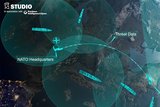
Against the backdrop of rising ‘peer’ and regional state rivals, the role of space-based assets for effective missile defence will be critical.

Adding a space layer to missile defence is not an optional extra – it is crucial.
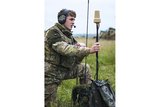
Add-on kit turns UHF/VHF radio into a BLoS solution to support voice and data communications.

Digital engineering is transforming the defence industry, from design to manufacturing.

The digital engineering concept creates an environment where a single, digital source of truth empowers defence manufacturing.

The MOESS programme intends to deploy a sovereign Australian tactical electromagnetic sensor capability, installed on a constellation of CubeSats. DEWC is developing a sensor that can conduct radar electronic support in defence-relevant radio frequency bands used by assets such as ships and aircraft.

Connect with us on socials


