Spain joins France and Germany on new combat fighter


Spain will join a Franco-German project to build a new fighter plane to replace the Eurofighter and Rafale, the defence ministry said on 11 February 2019.
Defence Minister Margarita Robles will sign a letter of intent with her French and German counterparts on Thursday on the margins of a NATO meeting in Brussels, a spokesperson said.
The project launched in July 2017 is known as the Future Combat Air System (FCAS), which in addition to a new combat aircraft also plans to include drones and cruise missiles.
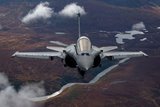
The new fighter jet will replace the Eurofighter which is assembled in Germany, Britain, Spain and Italy, and the French Rafale around 2040.
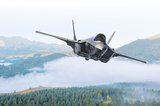
It will compete with the US F-35 or its successor.
A first contract worth €65 million was awarded to Airbus and Dassault Aviation in February to develop the design of the combat system.
Spain, where Airbus’s military transport planes are assembled, had sent a letter in December to Paris and Berlin asking to be associated with the project.
The FCAS has a rival - Britain’s Tempest project which has been awarded to BAE Systems, and which Italy and the Netherlands have also joined.
In a December statement, Spain’s defence ministry said it was ‘convinced that the two programmes would end up merging, given the huge investment needed in their development.’


More from Defence Notes
-
![“Capital follows confidence” as defence courts private money]()
“Capital follows confidence” as defence courts private money
Outside investment and the direction in which venture money flows may reveal what defence will buy years before formal programmes begin.
-
![Canada’s new military drone marketplace targets rapid acquisition pipeline]()
Canada’s new military drone marketplace targets rapid acquisition pipeline
The Department of National Defence expects initial contracts to deliver thousands of uncrewed systems, but has yet to establish the quantities, capability mix or deadline behind Ottawa’s promised tenfold expansion.
-
![Ukraine turns legacy Kongsberg land turrets into semi-autonomous USV weapons]()
Ukraine turns legacy Kongsberg land turrets into semi-autonomous USV weapons
The company told Shephard that Ukraine is operating modified Protector weapon stations originally supplied for armoured vehicles, with human operators authorising engagements from hundreds of kilometres away.
-
![UK urged to prioritise sea, air and space over heavy armour]()
UK urged to prioritise sea, air and space over heavy armour
A report from the Council on Geostrategy argues the UK should move away from a traditional balanced force and shift investment to naval, air and space capabilities, backed by a larger fleet of attack submarines and deeper AUKUS integration.
-
![Orchestrating operational readiness across every defence domain]()
Orchestrating operational readiness across every defence domain
Are all systems ready for the next mission? Have upgrades been applied? Are all assets aligned to deploy together, on time and fully prepared? In modern defence operations, readiness is no longer measured platform by platform. It is measured by how well people, assets, data and decisions move together — across land, sea and air.