Norway declares IOC for F-35A


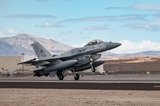
The Royal Norwegian Air Force’s fleet of Lockheed Martin F-35As has achieved initial operational capability (IOC), becoming the third European country to declare the milestone after Italy and the UK.
‘I would like to congratulate the Norwegian armed forces on declaring IOC with the F-35,’ Frank Bakke-Jensen, Norway’s defence minister, said.
‘This is a big day for the entire armed forces.’
Norway’s ministry of defence announced the milestone on 6 November following two years of intensive operational testing and evaluation (OT&E).
This two-year period saw the F-35A trialled in ‘special Norwegian conditions’, including winter operations, operations in the northern areas of the country, and joint operations with the Norwegian army, navy and special forces.
The OT&E period was concluded with the Norwegian armed forces transferring aircraft and equipment from its home base at Ørland Air Station to Rygge Air Station, which validated that the fifth-generation aircraft could be operated away from its main base.
Norway’s F35As will deploy to Iceland next year to conduct air policing efforts on behalf of NATO, and in 2022 the air force will have enough F-35s, pilots and maintainers to allow the aircraft to take over the ‘quick reaction alert’ mission, which is a 24/7 alert and scramble capability based at Evenes Air Station.
Norway plans to buy a total of 52 F-35As, according to the MoD.
Related Equipment in Defence Insight


More from Defence Notes
-
![Estonia opts for smart, adaptable and cooperative solutions in the face of Russian threat]()
Estonia opts for smart, adaptable and cooperative solutions in the face of Russian threat
Estonian-made equipment is being put through the toughest of evaluations in the hands of Ukrainian soldiers resisting the full-scale Russian invasion which began in 2022. The country has long seen the threat and is continuing to adapt for the future.
-
![Estonia boosting defence industry with lessons from Ukraine, says country’s economic minister]()
Estonia boosting defence industry with lessons from Ukraine, says country’s economic minister
Estonia is looking to boost its local defence industry with directed funding, industry parks, support through international orders for equipment and rapid prototyping.
-
![White House calls on Pentagon contractors to “rapidly and aggressively” boost weapon production]()
White House calls on Pentagon contractors to “rapidly and aggressively” boost weapon production
Intended to sustain Operation Epic Fury against Iran, efforts to increase the production of weapons and ammunition could expose long-standing weaknesses in the US defence industrial base.
-
![India’s strategic defence footprint expansion could be accelerated by Iran-Israel conflict]()
India’s strategic defence footprint expansion could be accelerated by Iran-Israel conflict
The latest escalation between Iran and Israel could shape New Delhi’s next-generation shield as India deepens cooperation with Israel on missile defence and drone production.
-
![Is the US magazine of air defence interceptors deep enough to sustain a long campaign against Iran?]()
Is the US magazine of air defence interceptors deep enough to sustain a long campaign against Iran?
The Pentagon spent a considerable number of THAAD and SM-3 rounds to defend against Iranian missiles in 2025 and has not fully replenished its reserves.