Lockheed Martin emphasises self-funding efforts for “big bet” next-gen prototypes
Sikorsky’s autonomous Black Hawk was unveiled in October at AUSA. (Photo: Sikorsky)
A significant effort is now being made to focus on showcasing prototypes directly to demonstrate various capabilities to the US government.


Lockheed Martin has emphasised an adjustment to how the company spends internal research and development (R&D) funds towards “big-bet, home run” projects.
Speaking during the company’s Q3 earnings call, president and CEO Jim Taiclet said that Lockheed Martin’s approach to R&D allocation has shifted slowly over the last five years towards a focus on developing self-funded prototypes.
Once divided between business units for their own important programmes, an increasing level of the funding now goes towards what Taiclet termed as “real highlight corporate-level R&D programmes”.
The company hit a record quarter with a US$179 billion backlog and strong global demand for
Our news & analysis is now part of Defence Insight®
A Basic-level or higher Defence Insight subscription is now required to view this content.
More from Air Warfare
-
![UK eyes lightweight satellite communications for UAVs]()
UK eyes lightweight satellite communications for UAVs
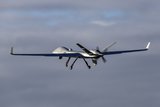
The UK is seeking to extend the operational reach of uncrewed aerial vehicles, reflecting growing demand for compact, energy-efficient technology to support beyond-line-of-sight operations.
-
![Loyal wingman programmes gather pace as US and European procurement plans take shape]()
Loyal wingman programmes gather pace as US and European procurement plans take shape
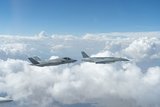
Northrop Grumman, Airbus and Anduril are positioning their uncrewed aerial vehicles for future collaborative combat aircraft contracts in a market that is forecast to exceed $36 billion.
-
![UK A400M Saudi deployment highlights airlifter’s role as Airbus pursues upgrades]()
UK A400M Saudi deployment highlights airlifter’s role as Airbus pursues upgrades
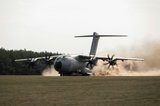
Airbus is developing new capabilities for its A400M transport aircraft as European countries consider future airlift requirements and the UK plans to deploy the aircraft to Saudi Arabia.
-
![The new generation of defence companies emerging from the US UAV boom]()
The new generation of defence companies emerging from the US UAV boom
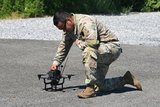
As the Pentagon accelerates procurement of low-cost, lethal UAVs through its Drone Dominance Program, emerging suppliers will need to demonstrate manufacturing capacity, supply chain resilience and reliability.
-
![US Coast Guard faces key procurement decisions after C-130J and MQ-9B orders]()
US Coast Guard faces key procurement decisions after C-130J and MQ-9B orders
The service is updating several parts of its aviation fleet including fixed-wing and rotary-wing aircraft and procuring uncrewed aircraft to boost its maritime surveillance.