Five Power Defence Arrangements stays firm to original principles
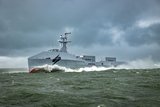
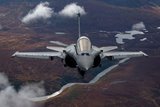
A fly-past and naval review for the 50th anniversary celebration of the FPDA was held in Singapore. (Chen Chuanren)
This year marks the 50th anniversary of the long-running FPDA, but is it still relevant?


Singapore’s Defence Minister Ng Eng Hen signalled there is unlikely to be any seismic changes to the Five Power Defence Arrangements (FPDA), despite military chest-beating in the greater Asia-Pacific region.
He described the greatest threat to the region as not being any single country, but ‘misunderstanding and miscalculations’.
‘The FPDA acts as a stabiliser for the region. It acts as a paradigm of an inclusive military grouping that works together for the peace, or regional stability, of the region,’ he told media.
He later explained to Shephard that no impending threats are coming from other countries, and the posture of
Our news & analysis is now part of Defence Insight®
A Basic-level or higher Defence Insight subscription is now required to view this content.


More from Defence Notes
-
![Ukraine turns legacy Kongsberg land turrets into semi-autonomous USV weapons]()
Ukraine turns legacy Kongsberg land turrets into semi-autonomous USV weapons
The company told Shephard that Ukraine is operating modified Protector weapon stations originally supplied for armoured vehicles, with human operators authorising engagements from hundreds of kilometres away.
-
![UK urged to prioritise sea, air and space over heavy armour]()
UK urged to prioritise sea, air and space over heavy armour
A report from the Council on Geostrategy argues the UK should move away from a traditional balanced force and shift investment to naval, air and space capabilities, backed by a larger fleet of attack submarines and deeper AUKUS integration.
-
![Thales: deployment speed to determine winners in ‘production versus production’ era]()
Thales: deployment speed to determine winners in ‘production versus production’ era
At its technology summit in London, attended by Shephard, Thales UK examined the importance of speed to delivery, the growing focus on cross-domain capabilities and how procurement reform could be crucial for future battlefield advantage.
-
![Orchestrating operational readiness across every defence domain]()
Orchestrating operational readiness across every defence domain
Are all systems ready for the next mission? Have upgrades been applied? Are all assets aligned to deploy together, on time and fully prepared? In modern defence operations, readiness is no longer measured platform by platform. It is measured by how well people, assets, data and decisions move together — across land, sea and air.