DSA 2022: Malaysia, Indonesia and the Philippines seal tighter trilateral ties
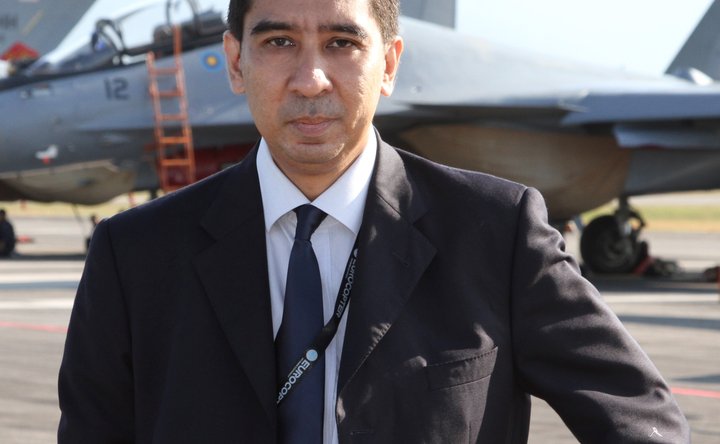
Malaysian Defence Minister Hishammuddin Hussein (centre), Indonesian Defence Minister Prabowo Subianto (left) and Philippines Defense Secretary Delfin Lorenzana announcing the results of the latest Trilateral Cooperative Agreement meeting. (Photo: Malaysi
The Trilateral Cooperative Arrangement (TCA) between Malaysia, Indonesia and the Philippines once focused exclusively on maritime and air patrols, but it is now extending beyond those boundaries.


The Trilateral Cooperative Arrangement (TCA) between Malaysia, Indonesia and the Philippines to ensure security in the Sulu Sea and Celebes Sea is to be further expanded and improved upon, the defence ministers of the three countries announced in a joint press conference on 28 March during the Defence Services Asia (DSA) 2022 exhibition in Kuala Lumpur.
Malaysian Defence Minister Hishammuddin Hussein said that he held a meeting with Prabowo Subianto and Delfin Lorenzana (his Indonesian and Filipino counterparts) to discuss the TCA and take stock of progress in trilateral relations, along with discussing various issues of significance to the TCA.
Our news & analysis is now part of Defence Insight®
A Basic-level or higher Defence Insight subscription is now required to view this content.

More from Defence Notes
-
![Orchestrating operational readiness across every defence domain]()
Orchestrating operational readiness across every defence domain
Are all systems ready for the next mission? Have upgrades been applied? Are all assets aligned to deploy together, on time and fully prepared? In modern defence operations, readiness is no longer measured platform by platform. It is measured by how well people, assets, data and decisions move together — across land, sea and air.
-
![Global tensions drive defence supply chain scrutiny]()
Global tensions drive defence supply chain scrutiny
Governments worldwide are scrambling to decouple defence supply chains from dependency upon strategic rivals, but countries could struggle to do it all themselves.
-
![How deepening AI usage can boost efficiency and maximise effects for forces]()
How deepening AI usage can boost efficiency and maximise effects for forces
Saab has outlined how it is using artificial intelligence to make training more like electronic gaming, while the UK’s Power Size Technologies is applying the same technology to better evaluate and design vehicle capability, moving AI-enabled innovation further upstream from the frontline.
-
![From systems integrator to multi-domain solutions provider (video)]()
From systems integrator to multi-domain solutions provider (video)
Philipp von Brandenstein, Head of Corporate Communications at Rheinmetall, explains how Eurosatory 2026 marked a new stage in the company's evolution.
-
![US Pentagon pushes for major reform of defence acquisition system]()
US Pentagon pushes for major reform of defence acquisition system
The US Department of Defense has requested new contracting authorities from Congress, using the Army's MV-75 Cheyenne programme to demonstrate how competition, digital engineering and closer industry collaboration could accelerate acquisitions.