DARPA eyes nuclear propulsion for cislunar space-based surveillance
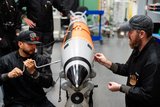
General Atomics is working on the first phase of the Demonstration Rocket for Agile Cislunar Operations (DRACO) programme.


DARPA has issued a $22.16 million contract to General Atomics for Track A in the Demonstration Rocket for Agile Cislunar Operations (DRACO) programme.
Work is scheduled for completion by October 2022, the DoD announced on 9 April.
DRACO is a plan for the US to maintain space domain awareness between the Earth and the Moon, using a nuclear thermal propulsion (NTP) system on orbit.
According to the DARPA website: ‘NTP uses a nuclear reactor to heat propellant to extreme temperatures before expelling the hot propellant through a nozzle to produce thrust. Compared to conventional space propulsion technologies, NTP offers a high thrust-to-weight ratio around 10,000 times greater than electric propulsion and two-to-five times greater specific impulse (i.e. propellant efficiency) than chemical propulsion.’
Track A of DRACO involves baseline design of an NTP reactor. It will be followed by Track B (development of an operational system concept and a demonstration system with technology maturation plan).
As part of our promise to deliver comprehensive coverage to our Defence Insight and Premium News subscribers, our curated defence news content provides the latest industry updates, contract awards and programme milestones.




More from Defence Notes
-
![US speeds up B61-13 nuclear bomb production as programme moves further ahead of schedule]()
US speeds up B61-13 nuclear bomb production as programme moves further ahead of schedule
The US government plans to accelerate production even further after achieving key B61-13 milestones months ahead of schedule, as the programme advances amid growing US-China strategic competition.
-
![Canada seeks to strengthen industrial ties with the US on classified programmes]()
Canada seeks to strengthen industrial ties with the US on classified programmes
Ottawa explores expanding defence-industrial cooperation with Washington into sensitive programmes, an approach that could reshape NORAD modernisation, strengthen North American supply chains and create new opportunities for defence contractors.
-
![UK’s latest defence robotics and autonomy competition looks to break new ground]()
UK’s latest defence robotics and autonomy competition looks to break new ground
The UK Ministry of Defence is backing early-stage, high-risk autonomy concepts that could redefine how military systems are developed and deployed.
-
![How AI is reshaping defence procurement through sustainment]()
How AI is reshaping defence procurement through sustainment
Artificial intelligence is not just changing how defence equipment is maintained but how defence programmes are won, creating new opportunities for industry by influencing acquisition decisions and shaping competition.