Vincorion to supply vital SAR equipment
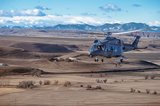
Rescuing soldiers from difficult terrain such as mountains or the sea is a challenging task, Vincorion's hydraulic rescue hoist is here to help. (Photo: Vincorion)
Vincorion to supply rescue hoist systems.


Vincorion has received an order to supply 100 hydraulic Rescue Hoist Systems (RHS) for military transport helicopters.
The contract is valued at around €11.5million, to be paid over the period between now and 2028.
Deliveries are scheduled to begin in the third quarter of 2021.
The hoist system is field-proven for loads of up to 400kg and rescue operations up to 270kg.
Vincorions’s hydraulic Rescue Hoist System is mainly used for SAR and military missions.
It can also be used as a cargo hoist, while the helicopter is on the ground.
In rescue mode, the hoist reaches a maximum speed of 1.25 metres per second with a hoisting capacity of up to 270kg.
In cargo mode, the system reaches speeds of up to 0.4 metres per second and can move up to 400kg.
Vincorion brings years of experience to this product, having manufactured the first of more than 130 rescue hoists for the Bell UH-1D helicopter in the 1970s.

More from Air Warfare
-
![AFA 2026: Swarm Aero eyes 2027 Gamera flight as Textron/Merlin reveal SkyCourier UX]()
AFA 2026: Swarm Aero eyes 2027 Gamera flight as Textron/Merlin reveal SkyCourier UX
Two new uncrewed aircraft concepts target very different US military requirements, from massed long-range strike to autonomous logistics. Shephard spoke with executives from Swarm Aero, Textron Aviation and Merlin Labs at this year's AFA Air, Space and Cyber conference to learn more about their capabilities.
-
![US Navy moves EA-18G Growler Block II electronic-attack upgrade into full-rate production]()
US Navy moves EA-18G Growler Block II electronic-attack upgrade into full-rate production
A US$184.25 million contract for Next Generation Electronic Attack Units advances the Growler’s modernisation as the US Navy confronts ageing systems, parts shortages and obsolescence.
-
![Could the next UAS market boom take place beyond the battlefield?]()
Could the next UAS market boom take place beyond the battlefield?
While the headlines remain dominated by the use of drones for combat operations in Ukraine and other conflicts, there are emerging use cases where the technology could usefully feed back into areas and missions outside the war zone.