US Army FARA prototypes 95% complete while FLRAA stays on full halt
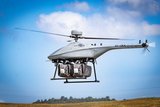
The US Army Future Attack Reconnaissance Aircraft programme winner is expected to enter low-rate production by 2028. (Photo: Bell)
Sikorsky and Bell helicopter proposals are drawing close to completion for the US Army’s Future Attack Reconnaissance Aircraft competition.


Both US Army Future Attack Reconnaissance Aircraft (FARA) programme contenders, the Bell 360 Invictus and Sikorsky S-97 Raider X, are over 95% ready as both types await delivery of the General Electric T901 3,000hp engine.
Under the Improved Turbine Engine Program (ITEP), the GE turboshaft will be integrated into both aircraft.
Talking to reporters during a press briefing at Bell’s Flight Research Center in Arlington, Texas, in early February, executive VP for advanced vertical lift systems Keith Flail said the company expects the delivery of the T901 in the spring of this year.
He added that receiving the engine is obviously
Our news & analysis is now part of Defence Insight®
A Basic-level or higher Defence Insight subscription is now required to view this content.



More from Air Warfare
-
![AFA 2026: US Air Force examines uncrewed cargo aircraft for contested logistics]()
AFA 2026: US Air Force examines uncrewed cargo aircraft for contested logistics
The US Air Force is evaluating demonstrators for uncrewed cargo missions as it considers logistics requirements across the Pacific and other contested environments.
-
![Germany air focus: Europe’s leading near-term air market targets domestic industry]()
Germany air focus: Europe’s leading near-term air market targets domestic industry
Between 2026 and 2032, almost a quarter of EU aircraft spending is expected to come from Germany. While crewed programmes seek modernisation and replacement, uncrewed opportunities look to introduce entirely new capabilities, with both highlighting sovereignty and domestic production.
-
![Europe risks losing control of CUAS production capacity as manufacturers look abroad]()
Europe risks losing control of CUAS production capacity as manufacturers look abroad
European counter-drone developers are securing early orders in the Middle East while slow domestic acquisition processes threaten to redirect production capacity, expertise and investment away from Europe.
-
![AFA 2026: Swarm Aero eyes 2027 Gamera flight as Textron/Merlin reveal SkyCourier UX]()
AFA 2026: Swarm Aero eyes 2027 Gamera flight as Textron/Merlin reveal SkyCourier UX
Two new uncrewed aircraft concepts target very different US military requirements, from massed long-range strike to autonomous logistics. Shephard spoke with executives from Swarm Aero, Textron Aviation and Merlin Labs at this year's AFA Air, Space & Cyber conference to learn more about their capabilities.