US approves more AIM-120C AMRAAM missiles for Singapore
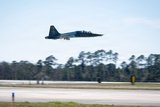
AMRAAM AIM-120C-8 is widely used and more have been ordered by Singapore. (Photo: US Air Force)
The approval of the sale of Raytheon (RTX) AIM-120C-8 Advanced Medium Range Air-to-Air Missiles (AMRAAM) to Singapore follows similar approvals of the missile to Israel, Japan, Norway, Poland and Sweden in the past 12 months.


The US State Department has approved the sale of 54 AIM-120C-8 AMRAAMs to Singapore under a US$133 million deal which includes additional equipment and services.
As well as the missiles, the request includes and two AIM-120C-8 AMRAAM guidance sections, control section spares, missile containers and support equipment.
Also included are Common Munitions Built-In-Test (BIT)/Reprogramming Equipment (CMBRE), ADU-89/E Adapter Group Computer Test Set, spare parts, consumables and accessories, and repair and return support as well as weapon system support and software and classified software delivery and support.
Last month the sale of 30 AIM-120C-8’s was approved to Israel along with billions-of-dollars of other equipment and in June the sale to Norway was approved of 300 of the same missiles and related equipment under a deal worth $1.9 billion.
In April, Poland received approval for 745 AIM-120-8s and equipment for $1.7 billion and Sweden signed a $605-million deal for 250 AIM-120C-8s in November.
The orders for the weapon in Eastern Europe and Scandinavia reflects a defence posture caused by Russian aggression against Ukraine and the fact the weapon can also be used from Raytheon/Kongsberg National Advanced Surface to Air Missile System (NASAMS) air defence system.
Related Equipment in Defence Insight



More from Air Warfare
-
![July drone digest: Sovereign production takes centre stage at Farnborough]()
July drone digest: Sovereign production takes centre stage at Farnborough
Farnborough International Airshow (FIA) 2026 revealed the growing scale of the UK’s uncrewed ambitions, with companies showcasing new CCA, autonomous wingmen and surveillance drones, while sovereign production emerged as a key factor for multiple programmes.
-
![FIA 2026: Bell highlights MOSA-driven growth path for MV-75 Cheyenne]()
FIA 2026: Bell highlights MOSA-driven growth path for MV-75 Cheyenne
Bell Flight’s modular open-systems approach for the US Army’s MV-75 Cheyenne could open doors for international allies and suppliers once locked out by closed rotorcraft architectures.
-
![Maximise survivability with advanced electronic warfare (video)]()
Maximise survivability with advanced electronic warfare (video)
BAE Systems’ all-digital EW delivers 360-degree threat awareness in contested environments, boosts survivability, and cuts lifecycle costs.
-
![US Air Force seeks avionics upgrades for ageing T-38 Talon as T-7A Red Hawk delays persist]()
US Air Force seeks avionics upgrades for ageing T-38 Talon as T-7A Red Hawk delays persist
The USAF is looking for commercial avionics solutions to improve the T-38 Talon’s reliability, readiness and flight safety as continued T-7A Red Hawk delays increase the likelihood that the legacy trainer will remain in service longer than planned.
-
![British Army’s Project Corvus selection highlights new era of drone sovereignty]()
British Army’s Project Corvus selection highlights new era of drone sovereignty
The UK’s choice of the Tekever AR5 for Project Corvus reflects a wider shift in military drone procurement towards solutions that centre on sovereignty and domestic production, moving away from overseas reliance.