Poland secures mega missile order for $3.5 billion on 25th NATO anniversary
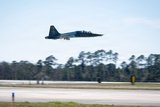
Poland is now spending around 4% of GDP on advancing its armed forces and has called on its NATO partners to spend 3% of GDP. (Photo: Lockheed Martin)
Poland’s military modernisation agenda has continued with the approval of multibillion-dollar missile agreements, as the country attempts to demonstrate its commitment to defence amid regional tensions.


Poland has remained steadfast in its military procurement spree which has shown no sign of slowing down. In the latest update, the US has authorised three separate FMS missile agreements for the country, amounting to more than US$3.5 billion.
Warsaw has requested to buy up to 821 AGM-158B-2 Joint Air-to-Surface Standoff Missiles with Extended Range (JASSM-ER) All-Up-Rounds for $1.8 billion, 232 AIM 9X Sidewinder Block II Tactical Missiles with 16 guidance units under a $219 million package, and 745 AIM-120-8 Advanced Medium Range Air-to-Air Missiles (AMRAAM) for $1.7 billion.
When compared to the base JASSM, the ER increment has a more fuel-efficient
Our news & analysis is now part of Defence Insight®
A Basic-level or higher Defence Insight subscription is now required to view this content.



More from Air Warfare
-
![July drone digest: Sovereign production takes centre stage at Farnborough]()
July drone digest: Sovereign production takes centre stage at Farnborough
Farnborough International Airshow (FIA) 2026 revealed the growing scale of the UK’s uncrewed ambitions, with companies showcasing new CCA, autonomous wingmen and surveillance drones, while sovereign production emerged as a key factor for multiple programmes.
-
![July air forces review: Farnborough steals the headlines as programmes develop]()
July air forces review: Farnborough steals the headlines as programmes develop
The biannual Farnborough International Airshow 2026 was the backdrop in July for scores of deals, partnerships and announcements, including developments in the multinational next-generation Global Combat Air Programme and the UK’s $486 million trainer aircraft requirement.
-
![FIA 2026: Bell highlights MOSA-driven growth path for MV-75 Cheyenne]()
FIA 2026: Bell highlights MOSA-driven growth path for MV-75 Cheyenne
Bell Flight’s modular open-systems approach for the US Army’s MV-75 Cheyenne could open doors for international allies and suppliers once locked out by closed rotorcraft architectures.
-
![Maximise survivability with advanced electronic warfare (video)]()
Maximise survivability with advanced electronic warfare (video)
BAE Systems’ all-digital EW delivers 360-degree threat awareness in contested environments, boosts survivability, and cuts lifecycle costs.
-
![US Air Force seeks avionics upgrades for ageing T-38 Talon as T-7A Red Hawk delays persist]()
US Air Force seeks avionics upgrades for ageing T-38 Talon as T-7A Red Hawk delays persist
The USAF is looking for commercial avionics solutions to improve the T-38 Talon’s reliability, readiness and flight safety as continued T-7A Red Hawk delays increase the likelihood that the legacy trainer will remain in service longer than planned.
-
![British Army’s Project Corvus selection highlights new era of drone sovereignty]()
British Army’s Project Corvus selection highlights new era of drone sovereignty
The UK’s choice of the Tekever AR5 for Project Corvus reflects a wider shift in military drone procurement towards solutions that centre on sovereignty and domestic production, moving away from overseas reliance.