US approves anti-radiation missile control section upgrade contract for UAE
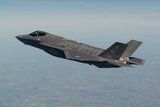
The AGM-88B missile was developed in the mid-1980s and incorporated an electronically reprogrammable memory that allowed changing the missile software in the field. (Photo: US DoD)
The High Speed Anti-Radiation Missile (HARM) is an air-to-surface anti-radiation missile designed to detect electronic transmissions coming from surface-to-air radar and then destroy it.


The US has approved a possible US$144 million FMS to the UAE for High Speed Anti-Radiation Missile (HARM) Control Section Modification Upgrade.
The Emirates has requested the purchase of up to a 149 WCU-33/B High-Speed Anti-Radiation Missile (HARM) Control Section Modification (HCSM) upgrade kits.
If approved by the US Congress, the FMS would also include high bandwidth HSCM telemetry kits loaned for integration support to be used in CONUS use only. This involves HARM Control Section containers, encryption devices, software and mission data support, test flight and live-fire range support, HARM support and test equipment, spare parts and other associated equipment and services.
The proposed sale will support US foreign policy and national security objectives by helping to improve the security of an important regional partner, the Defense Security Cooperation Agency noted in a statement, adding that the UAE remains a vital partner for the US.
“The proposed sale will improve the UAE’s capability to meet current and future threats by enhancing its capability to defend its national borders, bolster air-to-surface defensive capabilities, deter regional threats, and protect vital international commercial trading routes and critical infrastructure,” said the US government body.
The principal contractor of the FMS will be RTX Corporation.
The AGM-88 HARM is an air-to-surface anti-radiation missile designed to detect electronic transmissions coming from surface-to-air radar and then destroy it.
Related Equipment in Defence Insight



More from Air Warfare
-
![US military plans multi-UAV trials with Northrop Grumman quantum-navigated Lumberjack]()
US military plans multi-UAV trials with Northrop Grumman quantum-navigated Lumberjack
An undisclosed US military branch is preparing to evaluate multiple Lumberjack Group 3 drones equipped with SandboxAQ’s AQNav magnetic-navigation system. Shephard spoke with Northrop Grumman and SandboxAQ to find out more.
-
![Akinci: How Baykar turned the UAV into an African and Middle Eastern export success]()
Akinci: How Baykar turned the UAV into an African and Middle Eastern export success
From billion-dollar industrial partnerships in the Middle East to rapid military off-the-shelf deliveries in Africa, Baykar has tailored the Akinci to the needs of very different customers. Defence Insight data shows how flexibility, price and Turkish supply-chain independence have helped drive exports.
-
![US Pentagon pushes procurement of dismounted counter-UAS capabilities]()
US Pentagon pushes procurement of dismounted counter-UAS capabilities
The US services are investing in lighter, autonomous and networked systems to protect mobile troops from drone threats.
-
![US Army extended-range CUAS missile ramjet work to continue through December 2029]()
US Army extended-range CUAS missile ramjet work to continue through December 2029
Northrop Grumman’s US$18.8 million XRC propulsion contract runs through December 2029, but performance targets and the pathway to operational fielding remain undisclosed.