US approves additional $39 million JASSM-ER order for JASDF’s aircraft
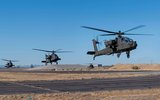
Japan’s plan to upgrade its F-15J fighters was restarted in 2022. (Photo: Japanese Ministry of Defense)
The contract for these additional missiles to equip its F-15J, F-35A and F-35B fighter jets follows its earlier request for 50 missiles in March 2024.


The US State Department has approved the sale of joint-air-to-surface missiles (JASSM-ER) to Japan to equip the F-15J, F-35A and F-35B fleets of the Japanese Air Self-Defense Force (JASDF).
The Government of Japan has asked to buy up to 16 JASSM-ER. Other items included in the sale include training missiles and containers, munitions support, spare parts and engineering and logistics support. Lockheed Martin will be the principal contractor for this sale.
This contract is part of a wider bid by Japan to modernise its F-15 fighter fleets. The upgrade will allow the F-15 aircraft to fire weapons like the JASSM-ER and Japan first signed a letter of acceptance for 50 of the weapons on 18 March 2024.
Related Articles
US approves sale of JASSM-ER missiles to Japan
Japan and South Korea upgrade F-15 fighters to keep them relevant
The Defense Security Cooperation Agency (DSCA) said that this sale would “improve Japan’s capability to meet current and future threats by providing stand-off capability via advanced, long-range strike systems for employment on Japan Air Self-Defense Force (JASDF) fighter aircraft, including but not limited to the F-15J and F-35A/B.”
On the JASSM-ERs, Japan had previously said that it needed the missiles to “strengthen standoff defense capabilities in order to intercept and eliminate invading against Japan at distance and at an early stage”.


More from Air Warfare
-
![October crewed air review: Israel’s Apache deal bets on crewed aviation in an uncrewed age]()
October crewed air review: Israel’s Apache deal bets on crewed aviation in an uncrewed age
Israel’s $1 billion Apache helicopter order highlights the continued demand for crewed attack aviation, while growing integration with uncrewed systems could shape future modernisation and procurement decisions.
-
![Connecting the layers: how networks can secure the future of European air defence]()
Connecting the layers: how networks can secure the future of European air defence
The rise of drones has reshaped the threat landscape for all European militaries. For industry, future defensive strategies must carefully balance a mix of passive and active measures to address the evolving danger, based around a highly integrated and responsive network of sensors and effectors.
-
![October drone digest: France and Lithuania advance loitering munition procurements as global spending surges]()
October drone digest: France and Lithuania advance loitering munition procurements as global spending surges
Recent procurement developments in France and Lithuania highlight the growing demand for loitering munitions, with global annual spending forecast to increase nearly 50-fold between 2020 and 2029.
-
![Quantum Systems details 480km/h Ukrainian interceptor as production scales up]()
Quantum Systems details 480km/h Ukrainian interceptor as production scales up
Quantum Systems’s Ukraine-made interceptor SPYS is thought to cost approximately 10 times less than Russia's jet-powered uncrewed aerial systems and is being produced at scale.