Thailand steps up modernisation efforts with AT-6 Wolverine order
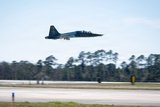
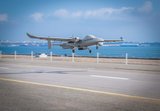
The Royal Thai Air Force has ordered a fleet of Beechcraft AT-6s. (Photo: Business Wire)
The Royal Thai Air Force has requested eight Beechcraft AT-6 Wolverine aircraft as part of its plans to modernise its inventory.


Textron Aviation Defence on 13 November announced a $142 million contract award from the Royal Thai Air Force (RTAF) for eight Beechcraft AT-6 Wolverine light attack aircraft, as the Asian country works to fill capability gaps in its military aircraft fleet.
The new aircraft — designated Beechcraft AT-6TH in Thailand — will partially replace the country’s ageing fleet of 33 Aero L-39 Albatros aircraft which entered service in 1992.
Air Mshl Pongsawat Jantasarn, chairman of the RTAF procurement committee, said: ‘The contract for the AT-6 — designated the Beechcraft AT-6TH in Thailand — supports the modernisation and interoperability objectives at the forefront of the mutual defence cooperation between the US and Thailand.’
He added: ’The contract also contributes to the growth of Thailand’s aerospace industry detailed in the 10-year Royal Thai Air Force Purchase and Development (P&D) Plan… and empowers RTAF light attack aircrew with a vital technological advantage.’
The AT-6 is a light attack armed reconnaissance aircraft, featuring a 10.4m wingspan and a PT6A-68D turboprop diesel engine by Pratt and Whitney.
The new deal builds upon a previous order placed by the Royal Thai Air Force in September 2020 for twelve Beechcraft T-6C Texan II trainers.
Textron Aviation Defense stated that training of RTAF maintenance professionals is set to begin in Thailand in 2023, while pilot training is set to begin in Wichita in 2024. The Beechcraft AT-6TH will join the Royal Thai fleet in 2024.
Despite reports in early 2020 that Tunisia intended to procure four AT-6 Wolverine, the sale was never confirmed.
For this reason, the new agreement will make Thailand the first international customer for this light attack aircraft.
Related Equipment in Defence Insight



More from Air Warfare
-
![July drone digest: Sovereign production takes centre stage at Farnborough]()
July drone digest: Sovereign production takes centre stage at Farnborough
Farnborough International Airshow (FIA) 2026 revealed the growing scale of the UK’s uncrewed ambitions, with companies showcasing new CCA, autonomous wingmen and surveillance drones, while sovereign production emerged as a key factor for multiple programmes.
-
![July air forces review: Farnborough steals the headlines as programmes develop]()
July air forces review: Farnborough steals the headlines as programmes develop
The biannual Farnborough International Airshow 2026 was the backdrop in July for scores of deals, partnerships and announcements, including developments in the multinational next-generation Global Combat Air Programme and the UK’s $486 million trainer aircraft requirement.
-
![Maximise survivability with advanced electronic warfare (video)]()
Maximise survivability with advanced electronic warfare (video)
BAE Systems’ all-digital EW delivers 360-degree threat awareness in contested environments, boosts survivability, and cuts lifecycle costs.
-
![US Air Force seeks avionics upgrades for ageing T-38 Talon as T-7A Red Hawk delays persist]()
US Air Force seeks avionics upgrades for ageing T-38 Talon as T-7A Red Hawk delays persist
The USAF is looking for commercial avionics solutions to improve the T-38 Talon’s reliability, readiness and flight safety as continued T-7A Red Hawk delays increase the likelihood that the legacy trainer will remain in service longer than planned.
-
![British Army’s Project Corvus selection highlights new era of drone sovereignty]()
British Army’s Project Corvus selection highlights new era of drone sovereignty
The UK’s choice of the Tekever AR5 for Project Corvus reflects a wider shift in military drone procurement towards solutions that centre on sovereignty and domestic production, moving away from overseas reliance.