Tactical UAS: mission-driven innovation for a new battlefield era
As global conflicts evolve and the limitations of traditional UAS become clear, Aeronautics is redefining the tactical unmanned aerial systems space with platforms that prioritize survivability, flexibility, and mission effectiveness.


Enjoy free access to this sponsored article, all content provided by Aeronautics
Delivering tactical advantage through resilient design
In today’s defense landscape, size and complexity are no longer guarantees of operational success. While medium-altitude, long-endurance (MALE) UAS still play a role, their high cost and operational vulnerability have exposed critical gaps on the modern battlefield. Aeronautics has stepped into this space with a new generation of tactical unmanned systems — that combine endurance, versatility, and survivability at a significantly lower footprint.
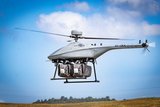
Designed for fast deployment and hard-to-detect operation, the Orbiter family (from Orbiter 2 to Orbiter 5) can carry advanced sensors and perform missions traditionally reserved for larger platforms. Runway-independent and built for harsh environments, the systems deliver agile, affordable ISR capabilities designed for contested and fast-moving operational theaters.
Adapting across domains: from ISR to precision strike
As warfare grows more complex and multi-domain by nature, Aeronautics is expanding the tactical reach of its systems - both in how they operate and where they are deployed.
- VTOL innovation: Aeronautics offers VTOL (vertical take-off and landing) variants of its fixed-wing UAS, such as the Orbiter 4, providing extended endurance and multi-payload flexibility with the ability to launch and recover in confined spaces, crucial for ground, urban or naval operations. In addition, the Octoper, a heavy-lift VTOL UAV, is tailored for shipboard operations. Its capabilities position it as a valuable asset for maritime ISR and precision strike missions, providing the flexibility needed in constrained or GPS-denied environments.
- Integrated loitering munitions: Systems like the Orbiter 2 ISR and Orbiter 2 LM are designed to work together, enabling real-time surveillance, target confirmation, and engagement – all from a coordinated platform duo. Aeronautics’ solution allows in-flight decision-making, including aborting or redirecting the munition, supported by advanced AI algorithms.
Designed for the field — refined by the field
At the core of Aeronautics’ innovation is a continuous, spiral development model, driven directly by feedback from operational users. The company maintains close relationships with frontline units, incorporating lessons learned and mission debriefs based on the vast operational data incorporated into synchronized updates and design upgrades.
This agile and spiral approach, combined with platform modularity, allows Aeronautics to evolve its systems in real time, rather than waiting for next-generation replacements. Strategic collaboration with Rafael further enhances this process, bringing advanced mission systems and sensors into Aeronautics platforms at high pace.
What we deliver is not a static product. We deliver systems that evolve in sync with shifting combat realities.
More than a platform: a full mission ecosystem
For Aeronautics, tactical UAS and loitering munitions are only one element of a broader operational solution. The company delivers integrated mission systems that combine the aircraft, control stations, payloads, communications, propulsion, and simulation, developed in-house or through fully owned subsidiaries. This internal integration enables tight coordination across design, development, and production, ensuring each component works seamlessly within the system.
The platform is just one part of the solution. Aeronautics’ advantage is in providing an optimized mission capability, from the airframe to the payload to the operator interface.
This ecosystem approach allows the company to adapt quickly to emerging operational demands and customer feedback.
Powered by people, shaped by purpose
Behind Aeronautics’ rapid growth and expanding global presence is a team defined by vision, energy, operational experience, and technical excellence. Over the past two years, the company has significantly scaled its operations, reflecting growing demand for its systems across multiple regions.
Our people are the engine behind everything we do. Their ability to rapidly translate complex operational needs into functional, reliable systems is what sets us apart.
As tactical UAS and loitering munitions continue to gain ground in modern warfare, offering faster, safer, and more flexible options for intelligence and precision strikes, Aeronautics has positioned itself not just as a state-of-the-art UAS developer and producer, but as a mission partner for future needs. As conflicts evolve, so do we – delivering not just systems, but decisive advantage.



More from Industry Spotlights
-
![Orchestrating operational readiness across every defence domain]()
Orchestrating operational readiness across every defence domain
Are all systems ready for the next mission? Have upgrades been applied? Are all assets aligned to deploy together, on time and fully prepared? In modern defence operations, readiness is no longer measured platform by platform. It is measured by how well people, assets, data and decisions move together — across land, sea and air.
-
![Extending mission readiness: where XR adds real value in pilot, crew and maintenance training]()
Extending mission readiness: where XR adds real value in pilot, crew and maintenance training
Extended reality (XR) is becoming increasingly relevant in military aviation training, adding a flexible layer to an integrated ecosystem spanning the pilot, crew, and maintenance domains.
-
![Dominating the spectrum: ASELSAN’s EW capabilities take center stage at MSPO 2026]()
Dominating the spectrum: ASELSAN’s EW capabilities take center stage at MSPO 2026
ASELSAN is showcasing its advanced electronic warfare (EW) capabilities at MSPO 2026, highlighting technologies designed to detect, analyse, disrupt and deceive threats across increasingly contested electromagnetic environments.
-
![“Creating a decision advantage”: how C-UAS is evolving to reduce the operator burden]()
“Creating a decision advantage”: how C-UAS is evolving to reduce the operator burden
In Conversation… Speaking to Shephard’s Gerrard Cowan, Dr Brian Shand, Director – Advanced Concepts & Technology at L3Harris, explains how, as operators face growing numbers of low-cost drones, C-UAS providers must focus on reducing operator workload, transforming fragmented sensor data into effective decision-making.
-
![Shield the warfighter, win the fight (video)]()
Shield the warfighter, win the fight (video)
BAE Systems’ Intrepid Shield™ approach delivers full-spectrum electromagnetic protection to detect, exploit, and counter advanced threats.
-
![How joint ventures are expanding Rheinmetall's munitions portfolio (video)]()
How joint ventures are expanding Rheinmetall's munitions portfolio (video)
Roman Köhne, CEO of Rheinmetall's Weapon and Ammunition Division, discusses the company's announcements at Eurosatory 2026, including developments in defence technology, precision systems, industrial partnerships and future capability programmes.