Spain signs deal with Airbus for SiRTAP MALE UAS
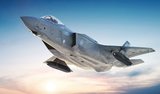
SIRTAP MALE UAV has been scheduled for first flight in 2025. (Image: Airbus)
Spain’s MoD has signed a deal with Airbus for a new multirole UAS which will be ITAR-free and primarily designed for ISTAR operations. It has been planned for service with Spain, Colombia and Serbia.


Spain’s MoD has inked a deal with Airbus for the development and purchase of Sistema RPAS Táctico de Altas Prestaciones (SiRTAP) multirole medium-altitude long-endurance (MALE) UAS.
The contract has included a total of nine systems, each consisting of three UAVs. One ground control station and two simulators will be supplied to train the Spanish Armed Forces.
Jean-Brice Dumont, head of military air systems at Airbus Defence and Space, said the development of the system solely in Spain would support national sovereignty and help to integrate national capabilities.
‘[Additionally] the fact the system uses ITAR-free components means we also expect it to play a key role on the international market,’ Dumont noted.
Primarily designed for ISTAR operations, the modular UAV can be outfitted for other mission sets and will be certified to fly in segregated airspace.
The UAV will be able to carry a payload of more than 150kg and will have a range of more than 2,000km with an endurance of more than 20h.
First flight of the SiRTAP prototype will be expected to take place in 2025. Colombia, which has a role in the development and production programme, is a planned customer and in July 2023 Serbia announced it was planning to join the programme.
Shephard Defence Insight estimated, based on information about Spain’s purchase of 27 units at an investment of US$565.18 million, that each unit would cost $20.9 million and have a flyaway unit cost of $16.7 million.




More from Air Warfare
-
![Saab’s GlobalEye gains ground as Canada’s aircraft procurement tilts towards Europe]()
Saab’s GlobalEye gains ground as Canada’s aircraft procurement tilts towards Europe
Canada’s interest in negotiating a procurement of Saab’s GlobalEye airborne early warning and control aircraft signals its readiness to reduce its reliance on US defence technology as trade tensions with its North American neighbour mount.
-
![South American EW demand balances capability against cost]()
South American EW demand balances capability against cost
South American air forces are weighing advanced electronic warfare capabilities against limited budgets as Peru selects Viper Shield and BAE Systems targets smaller airborne platforms.
-
![September crewed air review: established platforms retain their grip on the market]()
September crewed air review: established platforms retain their grip on the market
With many next-generation capabilities still years from operational readiness, several of the month’s largest developments demonstrated that governments remain willing to invest heavily in aircraft with proven capabilities and established support networks.
-
![Will the US Navy F/A-XX and the USAF F-47 compete for production capacities?]()
Will the US Navy F/A-XX and the USAF F-47 compete for production capacities?
The two sixth-generation fighter programmes could battle for engineering talent and production lines before deliveries begin, testing Boeing’s industrial expansion plans.