Skydweller solar-powered aircraft achieves first autonomous flight
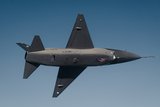
Skydweller Aero has seen interest from Five Eyes and NATO countries. (Photo: Skydweller Aero)
Skydweller Aero's solar-powered solution completed its first fully autonomous flight and is being offered for military intelligence use.


Last month, Skydweller, a large solar-powered UAV, made its first fully autonomous flight.
The aircraft can stay aloft for months or more than a year and is being offered as a concept for military intelligence applications.
Speaking to Shephard, Skydweller Aero CEO Robert Miller said: ‘We are a 365-day-a-year aircraft and can carry up to 800lb, depending on the time of year and latitude.
‘We supply, on average, 2 kilowatts over the course of a 24-hour day. We will use the same sensors that are flying on MQ-1C, MQ-9, King Air and PC-12 platforms.’
The solar-powered aircraft can
Already have an account? Log in
Want to keep reading this article?



More from Air Warfare
-
![First confirmed US one‑way drone strike on Iran sharpens Pentagon UAV expansion]()
First confirmed US one‑way drone strike on Iran sharpens Pentagon UAV expansion
The US is currently escalating its efforts to acquire more than 300,000 low-cost one-way attack drones, with the confirmed use of these platforms against Iran in recent days emphasising their growing use in combat.
-
![UK MoD awards Leonardo with £1 billion New Medium Helicopter contract]()
UK MoD awards Leonardo with £1 billion New Medium Helicopter contract
The £1 billion contract has secured jobs at Leonardo’s Yeovil site and will provide the British forces with 23 new medium-lift helicopters.
-
![NSPA outlines next steps for NATO’s Next-Generation Rotorcraft Capability effort]()
NSPA outlines next steps for NATO’s Next-Generation Rotorcraft Capability effort
The NATO agency gave further updates on the next stages of its rotorcraft programme and timelines for the next three years, with the initiative aimed at replacing ageing medium-lift helicopters in various NATO countries.
-
![UK’s New Medium Helicopter deal finalisation on horizon, alludes Leonardo CEO]()
UK’s New Medium Helicopter deal finalisation on horizon, alludes Leonardo CEO
A potential announcement within days could end speculation around the UK Ministry of Defence’s procurement direction for the NMH programme.
-
![UK Royal Navy notes hybrid air wing progress with eyes on Peregrine drone development]()
UK Royal Navy notes hybrid air wing progress with eyes on Peregrine drone development
The Royal Navy’s Maritime Aviation Transformation (MATX) initiative aims to modernise aviation capabilities to use uncrewed systems where possible, supporting its goal of a hybrid air wing by 2040.