Singapore at-sea deployment of F-35Bs can overcome airfield dependency
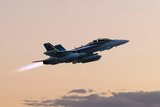
The RSAF is one of the strongest and most well-trained air arms in the region, but its air bases are all in close proximity to each other. (Photo: US DoD)
Singapore could potentially deploy F-35Bs from its Joint Multi-Mission Ship to overcome airfield dependency and improve air defence as part of its apparent new security strategy.


After comprehensive evaluations, Singapore recently confirmed it would purchase eight more F-35B fighters, bringing the fleet to 12.
The Republic of Singapore Air Force (RSAF) selected the F-35B in 2020 as the initial successor to its F-16C/D, with the latter set to begin withdrawal in 2030.
Singapore is going to be the first Southeast Asian country to receive the B variant of the Lockheed Martin fifth-generation jet in 2026.
Singapore is also unique in that it is the only customer with no plans to deploy the short-take-off and vertical landing (STOVL) F-35B from a ship – not officially, anyway.
Our news & analysis is now part of Defence Insight®
A Basic-level or higher Defence Insight subscription is now required to view this content.


More from Air Warfare
-
![Pentagon’s 800% PAC-3 MSE surge faces production bottleneck as Patriot demand soars]()
Pentagon’s 800% PAC-3 MSE surge faces production bottleneck as Patriot demand soars
The Pentagon wants to procure 3,203 PAC-3 MSE interceptors in FY2027, but production constraints and international demand could impact efforts to rebuild depleted missile stocks.
-
![AI-controlled F-16s advance towards autonomous multi-aircraft operations in US]()
AI-controlled F-16s advance towards autonomous multi-aircraft operations in US
The US plans to progressively expand VENOM/AIR testing from single-aircraft flights to multi-platform autonomous operations over the next 12–24 months, generating data that could support future US military AI programmes, including Collaborative Combat Aircraft.
-
![Canada targets 2028 operational debut for AIM-9X and AIM-120D missiles]()
Canada targets 2028 operational debut for AIM-9X and AIM-120D missiles
The missile programmes form part of a broader effort to strengthen Canadian air-combat readiness as the RCAF transitions from the CF-188 to the F-35A and rebuilds its operational weapons stocks.
-
![AIM-260 JATM deal puts Australia’s missile-industrial ambitions in focus]()
AIM-260 JATM deal puts Australia’s missile-industrial ambitions in focus
While a potentially accelerated acquisition timeline could strengthen the RAAF’s long-range air combat capability, Canberra’s continued reliance on US missile production is also put under the spotlight in parallel to its push to build a sovereign industry.
-
![Attack drones versus CUAS – the future of warfare or just another trend?]()
Attack drones versus CUAS – the future of warfare or just another trend?
Demand signals for counter-drone technology are strong and the market is becoming crowded, but is this really the beginning of a new phase of warfare or will commentators be talking about something else 10 years from now?