Singapore Airshow 2022: Lockheed Martin targets higher F-35 production for 2022
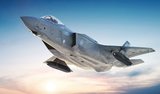
Lockheed Martin has forecast annual production of at least 148 F-35 fighter jets. (Photo: USAF)
Lockheed Martin has revealed its F-35 production target for 2022, aiming for a marginal increase over 2021 output.


Lockheed Martin has said it expects to produce between 148 and 153 F-35 fifth-generation fighter jets in 2022, representing a small increase on the 142 aircraft manufactured in 2021.
Should the new annual target be met, overall production would exceed 900 units, reinforcing a dominant market position for Lockheed Martin which could also improve if new orders arrive from Greece, Germany and the Czech Republic.
A flood of orders has already arrived from Asia-Pacific customers including Australia, Japan, South Korea and Singapore, with Thailand also expressing interest.
‘We’re watching the US government decide how they’re going to respond to that request
Our news & analysis is now part of Defence Insight®
A Basic-level or higher Defence Insight subscription is now required to view this content.


More from Air Warfare
-
![Saab’s GlobalEye gains ground as Canada’s aircraft procurement tilts towards Europe]()
Saab’s GlobalEye gains ground as Canada’s aircraft procurement tilts towards Europe
Canada’s interest in negotiating a procurement of Saab’s GlobalEye airborne early warning and control aircraft signals its readiness to reduce its reliance on US defence technology as trade tensions with its North American neighbour mount.
-
![US Air Force CCA programme to achieve multiple milestones in the coming months]()
US Air Force CCA programme to achieve multiple milestones in the coming months
The US Air Force is preparing to select mission-autonomy software, fire a missile from the FQ-42 Vengeance and test both CCA designs alongside crewed fighters at 2026 Emerald Flag.
-
![Will the US Navy F/A-XX and the USAF F-47 compete for production capacities?]()
Will the US Navy F/A-XX and the USAF F-47 compete for production capacities?
The two sixth-generation fighter programmes could battle for engineering talent and production lines before deliveries begin, testing Boeing’s industrial expansion plans.
-
![September drone digest: attrition-tolerant aircraft pitched to replace the Reaper]()
September drone digest: attrition-tolerant aircraft pitched to replace the Reaper
The loss of many MQ-9 Reapers during the 2026 Iran War has underscored the risks of sending relatively expensive UAVs into contested airspace. In September, new contenders to replace the Reaper emerged, championing cheaper, modular aircraft designs for mass production and inevitable attrition.