Norway revitalises effort to acquire a tactical-class UAV with $103 million competition
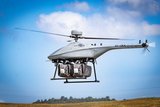
Schiebel’s Camcopter S-100 is one of the most popular VTOL-capable tactical-class UAVs. Norway could potentially acquire it for this effort. (Photo: Schiebel)
Norway first scoped the requirement in 2022, and included it in a defence strategy document in 2023. The announcement of a new framework agreement appears to have breathed fresh life into the effort.


The Norwegian Defence Material Agency (NDMA) published a notice on 31 March 2026 inviting suppliers to pre-qualify for a framework agreement to deliver a small, tactical uncrewed aerial vehicle (UAV) to the nation. The country has been known to require a UAV of this class since first issuing a request for information (RfI) about a similar UAV in September 2022.
The March 2026 notice, published on the EU tenders website, stated that the maximum value of the framework agreement was up to NOK1 billion (US$103 million) for a four-year duration, with options for a two- or one-year extension.
Given the tactical-class UAV
Our news & analysis is now part of Defence Insight®
A Basic-level or higher Defence Insight subscription is now required to view this content.

More from Air Warfare
-
![New US Army UH-60M Black Hawk order bridges uncertain path to MV-75 transition]()
New US Army UH-60M Black Hawk order bridges uncertain path to MV-75 transition
The US$234 million award for 16 Sikorsky UH-60Ms preserves near-term production, but funding uncertainty and an undefinitised contract leave the US Army’s long-term Black Hawk requirements unresolved.
-
![V-22 Osprey safety upgrade moves towards wider fleet installation under $35.5 million deal]()
V-22 Osprey safety upgrade moves towards wider fleet installation under $35.5 million deal
Bell Boeing will supply 73 additional ODSSHI kits as NAVAIR prepares to introduce predictive drive-system monitoring across US and Japanese V-22 fleets.
-
![AFA 2026: US Air Force examines uncrewed cargo aircraft for contested logistics]()
AFA 2026: US Air Force examines uncrewed cargo aircraft for contested logistics
The US Air Force is evaluating demonstrators for uncrewed cargo missions as it considers logistics requirements across the Pacific and other contested environments.
-
![Germany air focus: Europe’s leading near-term air market targets domestic industry]()
Germany air focus: Europe’s leading near-term air market targets domestic industry
Between 2026 and 2032, almost a quarter of EU aircraft spending is expected to come from Germany. While crewed programmes seek modernisation and replacement, uncrewed opportunities look to introduce entirely new capabilities, with both highlighting sovereignty and domestic production.