Raytheon upgrades KAI FA-50 combat aircraft with PhantomStrike radar
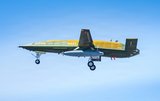
The FA-50 light attack aircraft is based on the T-50 trainer. (Photo: KAI)
Raytheon is to integrate its PhantomStrike fire control radar on the KAI FA-50 light attack aircraft.


Raytheon Technologies will outfit the Korea Aerospace Industries (KAI) FA-50 light combat aircraft with its new PhantomStrike radar.
The AESA radar is a fully air-cooled fire-control radar designed to provide long-range threat detection, tracking and targeting.
Thee US government has approved the product to be exported as a Direct Commercial Sale product to KAI.
PhantomStike can be integrated into light attack aircraft, helicopters, UAVs and ground-based towers as well.
‘Outfitting the FA-50 with the PhantomStrike radar upgrades the capability of a critical aircraft, providing unparalleled performance in a compact, affordable package,’ said Annabel Flores, president of Global Spectrum Dominance at Raytheon Technologies.
‘PhantomStrike makes it possible for KAI to offer high-performance fire control radar capabilities that can integrate with US and international weapon systems, so FA-50 customers maintain air dominance,’ she added.
Production of the radars will take place in Mississippi, Arizona and Scotland with support from Raytheon UK.
Initial deliveries are expected in 2025.
The FA-50 aircraft is based on the T-50 trainer’s performance and an armament storing capability, but it has been further developed and upgraded with a tactical data link, precision-guided munitions, and a self-protection subsystem.
The aircraft has been deployed and operated in the Republic of Korea Air Force (ROKAF) since 2013.


More from Air Warfare
-
![The new generation of defence companies emerging from the US UAV boom]()
The new generation of defence companies emerging from the US UAV boom
As the Pentagon accelerates procurement of low-cost, lethal UAVs through its Drone Dominance Program, emerging suppliers will need to demonstrate manufacturing capacity, supply chain resilience and reliability.
-
![Sophistication versus simplification: the divided future of air-to-air missiles]()
Sophistication versus simplification: the divided future of air-to-air missiles
As global air combat operations continue to evolve at a rate not seen for decades, what will the next generation of air-to-air weapons look like, and what missions will they need to fulfil?
-
![AUSA 2026: New multiwarhead loitering munition enters increasingly competitive market]()
AUSA 2026: New multiwarhead loitering munition enters increasingly competitive market
Heaviside Industries has unveiled its new Tyr loitering munition at AUSA 2026 in Washington, DC, joining a growing field of manufacturers seeking to capitalise on billions of dollars in anticipated military spending.
-
![Middle Eastern demand opens fresh export prospects for Lockheed Martin’s F-35 fighter jet]()
Middle Eastern demand opens fresh export prospects for Lockheed Martin’s F-35 fighter jet
A proposed Saudi Arabian purchase of 48 stealth fighters could signal a broader regional opportunity for the F-35 as European programmes mature.