


Tekever eyes naval carrier surveillance role for AR5 uncrewed aircraft
Tekever’s AR5 carrier debut highlights its potential for maritime surveillance as the Royal Navy develops its future hybrid air wing.


StormBreaker is cleared for use on F-15s and F/A-18E/F aircraft is being integrated on F-35 variants. (Photo: Raytheon)
Raytheon, an RTX company, has been awarded a US$345 million contract to supply US services with 1,500 StormBreaker (SDBII, GBU-53/B) tri-mode air-to-surface missiles.
The missile has three modes: millimetre wave radar, which detects and tracks targets through weather; imaging infrared, which provides enhanced target discrimination; and semi-active laser, which enables the weapon to track an airborne laser designator or one on the ground.
The multi-mode capability has been designed to allow for operations with less aircraft and the missile has a range of more than 65km.
Paul Ferraro, president of Air Power at Raytheon, said the contract would allow for the further development of the weapon’s production.
‘It is fielded on two platforms with testing underway for others [and] StormBreaker has solidified its place as the leading network enabled weapon across the Department of Defense.’
StormBreaker is fielded on the F-15E Strike Eagle and F/A-18E/F Super Hornet with testing underway on all variants of the F-35. Across the platforms, StormBreaker completed 28 test drops in 2023.
The funding is drawn from across the US Air Force and US Navy budgets with a small amount also from Foreign Military Sales on the contract described as Production Lot 10.

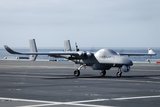
Tekever’s AR5 carrier debut highlights its potential for maritime surveillance as the Royal Navy develops its future hybrid air wing.

How can armed forces connect autonomous platforms and introduce new capabilities faster while maintaining security and airworthiness?
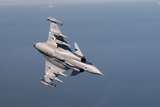
Ukraine’s future fighter fleet could combine F-16s, Gripens and potentially Rafales, balancing combat needs against training, logistics and aircraft supply constraints.
Northrop Grumman plans mission systems testing following its Hermeus agreement, highlighting how established defence contractors are partnering with newer companies to accelerate development and bring autonomous capabilities to military customers.
AI-powered sensing technologies are advancing battlefield intelligence capabilities, with companies including Sightline Intelligence and Arkeus developing smaller, more sophisticated systems to help military UAV operators process data and identify threats.
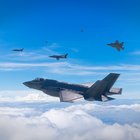
For decades, advanced military propulsion has centred on enabling ever-more capable fighters and bombers – delivering more thrust, more range, greater power, and thermal management, plus longer service lives. Those requirements remain essential. However, the rise of autonomous systems, advanced effectors, and autonomous collaborative platforms is redefining what that propulsion must deliver.

Connect with us on socials


