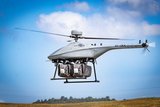
RAAF enhances air operations capability with TAOT
The first Transportable Air Operations Tower (TAOT) manufactured by Rohde & Schwarz. (Photo: Rohde & Schwarz Australia)
Rohde & Schwarz says it is undertaking substantial upgrades of its Transportable Air Operations Tower.


The first Transportable Air Operations Tower (TAOT) for the RAAF, delivered in 2012 by Rohde & Schwarz, has undergone a substantial upgrade.
Modernised systems include an Internet Protocol- (IP-) based voice communications and recording capability plus enhanced airfield monitoring and control; network and time synchronisation; and an upgrade to IP radios.
Other work on the upgrade included security hardening, provisioning of new interfaces, new uninterrupted power supplies, air conditioning, and smoke detectors.
This upgrade will be rolled out across the TAOT fleet and forms the first tranche of a spiral upgrade programme that aims to assure a continued capability for the RAAF and extend the service life of the deployable air traffic control tower to 2030 and beyond.
RAAF Base Scherger in Far North Queensland recently received a TAOT during the biennial multinational exercise Talisman Sabre 2021. Also, during Operation Bushfire Assist in 2019-20 a TAOT assisted civilian and military aircraft conducting remote firefighting and humanitarian aid missions.



More from Air Warfare
-
![V-22 Osprey safety upgrade moves towards wider fleet installation under $35.5 million deal]()
V-22 Osprey safety upgrade moves towards wider fleet installation under $35.5 million deal
Bell Boeing will supply 73 additional ODSSHI kits as NAVAIR prepares to introduce predictive drive-system monitoring across US and Japanese V-22 fleets.
-
![AFA 2026: US Air Force examines uncrewed cargo aircraft for contested logistics]()
AFA 2026: US Air Force examines uncrewed cargo aircraft for contested logistics
The US Air Force is evaluating demonstrators for uncrewed cargo missions as it considers logistics requirements across the Pacific and other contested environments.
-
![Germany air focus: Europe’s leading near-term air market targets domestic industry]()
Germany air focus: Europe’s leading near-term air market targets domestic industry
Between 2026 and 2032, almost a quarter of EU aircraft spending is expected to come from Germany. While crewed programmes seek modernisation and replacement, uncrewed opportunities look to introduce entirely new capabilities, with both highlighting sovereignty and domestic production.
-
![Europe risks losing control of CUAS production capacity as manufacturers look abroad]()
Europe risks losing control of CUAS production capacity as manufacturers look abroad
European counter-drone developers are securing early orders in the Middle East while slow domestic acquisition processes threaten to redirect production capacity, expertise and investment away from Europe.
-
![India’s rotary-wing capability gap grows as IMRH programme delays persist]()
India’s rotary-wing capability gap grows as IMRH programme delays persist
With IMRH and DBMRH potentially years from service, India faces a widening rotary-wing capability gap that could drive further foreign purchases even as HAL and Safran build the foundations of an indigenous successor.