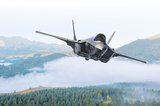
Singapore strengthens integrated air defence network
Singapore has created an air defence umbrella over the island nation with the integration of new assets such as ASTER-30 missiles.


The Republic of Singapore Air Force (RSAF) has officially inducted an enhanced C2 system into its greater island air defence system (IADS) network. Powered by data analytics and AI, the system is designed to allow the RSAF to better react to threats such as UAVs and munitions.
The RSAF has added MBDA’s ASTER-30 SAMP/T into the IADS network, marking a new milestone in the 14-year programme.
According to Lt Col Germaine Lim, branch head at the RSAF air plans department, the C2 system is now updated with a decision support system that identifies, classifies and recommends the most suitable asset
Our news & analysis is now part of Defence Insight®
A Basic-level or higher Defence Insight subscription is now required to view this content.


More from Air Warfare
-
![Spain air focus: Mature UAV market rewards early supplier engagement]()
Spain air focus: Mature UAV market rewards early supplier engagement
Spain accounts for 5% of European military UAV spending, broadly in line with its share of the continent’s wider defence market. What sets the country apart, however, is how much of that spending has already been committed, reflecting Spain's earlier adoption of the capability.
-
![New US Army UH-60M Black Hawk order bridges uncertain path to MV-75 transition]()
New US Army UH-60M Black Hawk order bridges uncertain path to MV-75 transition
The US$234 million award for 16 Sikorsky UH-60Ms preserves near-term production, but funding uncertainty and an undefinitised contract leave the US Army’s long-term Black Hawk requirements unresolved.
-
![V-22 Osprey safety upgrade moves towards wider fleet installation under $35.5 million deal]()
V-22 Osprey safety upgrade moves towards wider fleet installation under $35.5 million deal
Bell Boeing will supply 73 additional ODSSHI kits as NAVAIR prepares to introduce predictive drive-system monitoring across US and Japanese V-22 fleets.
-
![AFA 2026: US Air Force examines uncrewed cargo aircraft for contested logistics]()
AFA 2026: US Air Force examines uncrewed cargo aircraft for contested logistics
The US Air Force is evaluating demonstrators for uncrewed cargo missions as it considers logistics requirements across the Pacific and other contested environments.
-
![Germany air focus: Europe’s leading near-term air market targets domestic industry]()
Germany air focus: Europe’s leading near-term air market targets domestic industry
Between 2026 and 2032, almost a quarter of EU aircraft spending is expected to come from Germany. While crewed programmes seek modernisation and replacement, uncrewed opportunities look to introduce entirely new capabilities, with both highlighting sovereignty and domestic production.