OFTs for RAF Poseidons land in Lossiemouth


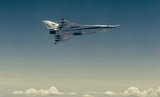
The RAF has received its first pair of high-fidelity flight training simulators from Boeing for the P-8A Poseidon (pictured - designated Poseidon MRA Mk1 in UK service).
The full-scale Operational Flight Trainers (OFTs) will be installed in the £100 million Poseidon base at RAF Lossiemouth, along with other training devices.
‘A suite of Boeing training devices have been developed to provide interactive, high-fidelity simulations to train the pilots who operate the aircraft, and the rear crew who operate the sensors, communication and weapon systems,’ the company announced in an 18 August statement.
The Poseidon multi-mission MPA is capable of broad-area, maritime and coastal operations. The RAF has nine aircraft on order; the first arrived in the UK on 4 February and the second followed in March. All nine are expected to arrive in the UK by the end of 2021, according to Shephard Defence Insight.
Both aircraft operate from Kinloss Airfield, before the Poseidon MRA Mk1-specific facilities and the upgraded runway at RAF Lossiemouth are formally opened later in 2020.
As part of our promise to deliver comprehensive coverage to our Defence Insight and Premium News subscribers, our curated defence news content provides the latest industry updates, contract awards and programme milestones.
Related Programmes in Defence Insight
Related Equipment in Defence Insight

You may also like
More from Air Warfare
-
![Northrop–Hermeus deal underscores push to pair startup speed with defence know-how]()
Northrop–Hermeus deal underscores push to pair startup speed with defence know-how
Northrop Grumman plans mission systems testing following its Hermeus agreement, highlighting how established defence contractors are partnering with newer companies to accelerate development and bring autonomous capabilities to military customers.
-
![Propulsion for the autonomous era]()
Propulsion for the autonomous era
For decades, advanced military propulsion has centred on enabling ever-more capable fighters and bombers – delivering more thrust, more range, greater power, and thermal management, plus longer service lives. Those requirements remain essential. However, the rise of autonomous systems, advanced effectors, and autonomous collaborative platforms is redefining what that propulsion must deliver.
-
![Czech Republic UAV focus: moderate market value masks limited supplier opportunities]()
Czech Republic UAV focus: moderate market value masks limited supplier opportunities
The Czech Republic’s shift towards smaller uncrewed aerial vehicles has reshaped its procurement priorities, leaving nearly three-quarters of the market unawarded. Yet with this value concentrated in just two programmes, the highest-value opportunities could contain a high level of risk.
-
![RAF Protector fleet grows as UK maritime surveillance role takes shape]()
RAF Protector fleet grows as UK maritime surveillance role takes shape
The RAF’s expanding Protector RG1 fleet could play a growing role in UK maritime surveillance following its first domestic operational sorties, with further aircraft deliveries scheduled through 2027.
-
![Leonardo details Proteus’s path to autonomous anti-submarine missions for the Royal Navy]()
Leonardo details Proteus’s path to autonomous anti-submarine missions for the Royal Navy
Leonardo’s integration of Shield AI’s Hivemind software could enable its Proteus uncrewed helicopter to conduct independent anti-submarine warfare missions, supporting the Royal Navy’s plans for a future hybrid air wing.