Malaysian navy establishes AW139 squadron
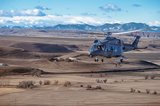
This is one of three AW139s belonging to 503 Squadron of the Royal Malaysian Navy. (RMN)
The Royal Malaysian Navy has set up a new helicopter squadron, equipped with AW139s, in East Malaysia.


The Royal Malaysian Navy (RMN) inaugurated its third helicopter squadron, 503 Squadron, along with RMN Kota Kinabalu Air Station, on 1 July.
This air station, which forms part of the RMN Kota Kinabalu Naval Base will host both 503 Squadron and 601 UAS Squadron, which operates 12 ScanEagle UAVs donated by the US in 2020-21. The latter squadron formally stood up on 4 March 2021.
503 Squadron will operate three Leonardo AW139 maritime operations helicopters, ordered in 2020. Two were received in April and are now operational, while a third will be delivered in September.
The squadron’s primary role
Our news & analysis is now part of Defence Insight®
A Basic-level or higher Defence Insight subscription is now required to view this content.


More from Air Warfare
-
![Could the next UAS market boom take place beyond the battlefield?]()
Could the next UAS market boom take place beyond the battlefield?
While the headlines remain dominated by the use of drones for combat operations in Ukraine and other conflicts, there are emerging use cases where the technology could usefully feed back into areas and missions outside the war zone.
-
![How geopolitics and new military alliances are disrupting combat aircraft procurement]()
How geopolitics and new military alliances are disrupting combat aircraft procurement
Selection of fighter aircraft by national governments has always been political. As markets and allegiances shift against a background of global realignment, who will be the winners and losers as new entrants compete with established suppliers?
-
![Singapore’s interest in GCAP reflects its long-term approach to air power]()
Singapore’s interest in GCAP reflects its long-term approach to air power
A potential interest in joining GCAP is indicative of Singapore’s long-term and methodical approach to defence procurement and could benefit its local defence industry.
-
![US military tests AI-powered CUAS turret against drone swarms]()
US military tests AI-powered CUAS turret against drone swarms
As the US continues to invest heavily in counter-drone systems, demand for low-cost, mobile and autonomous technologies is on the rise, with Edda designed to align with these emerging requirements.