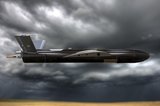
L3Harris to modernise and sustain AN/ALQ-172
The AN/ALQ-172 is installed on B-52H Stratofortress strategic bombers. (Photo: USAF/Senior Airman Jacob Thompson)
USAF picks contractor for EW technology aboard large aircraft.


The Electronic Warfare Contracting Branch of the Air Force Life Cycle Management Center has awarded L3Harris Technologies a ten-year IDIQ contract worth $947.29 million, to provide modernisation and engineering services associated with the AN/ALQ-172 radar warning receiver.
Work includes block cycle, non-block cycle and engineering sustainment, as well as enhancements for Air Force Global Strike Command, the DoD announced on 31 August.
The AN/ALQ-172 is installed on B-52H Stratofortress strategic bombers and the C-130 Hercules military transport aircraft. The system protects these aircraft from radar-guided threats.
Earlier in August, L3Harris was awarded a contract to provide repair services to the USAF for the AN/ALQ-172 radar warning receiver under a $39.73 million sole-source contract.
Related Equipment in Defence Insight


More from Air Warfare
-
![Ageing RQ-11 Raven fleets create a global replacement opportunity]()
Ageing RQ-11 Raven fleets create a global replacement opportunity
The RQ-11 Raven is being retired from service across most of its more than 30 operators. Defence Insight estimates that these Raven retirements open up a replacement market worth at least $576 million, but suppliers will have to act quickly and strike a balance between cost and capability to succeed.
-
![August drone digest: AEVEX solidifies large US loitering munition market share as procurement models shift]()
August drone digest: AEVEX solidifies large US loitering munition market share as procurement models shift
AEVEX has strengthened its position in the US loitering munition market with another contract award, solidifying its position as the second-largest supplier of the capability in the US. Elsewhere in August, new and emerging programmes in Sweden and Germany point to a broader shift towards larger, rolling framework agreements for loitering munitions across Europe.
-
![US Army seeks missile costing less than $150,000 to counter Group 2 and 3 drones]()
US Army seeks missile costing less than $150,000 to counter Group 2 and 3 drones
The service wants a rapid-response, extended-range interceptor compatible with the Coyote launcher and wider US Army air-defence architecture, with initial testing scheduled for late 2026.