KAI wins production contract for Light Attack Helicopter
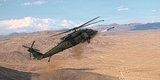
KAI has been awarded a first production contract for ten Light Attack Helicopters for the ROK Army. (Image: KAI)
The first series production examples of the Light Attack Helicopter have been ordered by the South Korean government.


On 22 December 2022, Korea Aerospace Industries (KAI) signed a contract for initial production batch of Light Attack Helicopters (LAH).
The contract with South Korea’s Defense Acquisition Program Administration (DAPA) is worth KRW302 billion ($236 million), and covers the first ten LAHs, as well as operator training, maintenance equipment and spare parts.
KAI will fulfil the contract over a three-year period, with the first helicopter due for delivery to the customer in December 2024.
However, KAI expects ongoing LAH production to continue until 2031, as follow-on contracts are awarded that may eventually amount to KRW5.75 trillion.
The OEM described the
Our news & analysis is now part of Defence Insight®
A Basic-level or higher Defence Insight subscription is now required to view this content.


More from Air Warfare
-
![Rafale AI trials highlight shift towards operational fighter testbeds]()
Rafale AI trials highlight shift towards operational fighter testbeds
Dassault’s latest Rafale trials join Gripen E and F-16 testing as developers explore how artificial intelligence could support and control combat aircraft.
-
![AFA 2026: US Air Force examines uncrewed cargo aircraft for contested logistics]()
AFA 2026: US Air Force examines uncrewed cargo aircraft for contested logistics
The US Air Force is evaluating demonstrators for uncrewed cargo missions as it considers logistics requirements across the Pacific and other contested environments.
-
![Germany air focus: Europe’s leading near-term air market targets domestic industry]()
Germany air focus: Europe’s leading near-term air market targets domestic industry
Between 2026 and 2032, almost a quarter of EU aircraft spending is expected to come from Germany. While crewed programmes seek modernisation and replacement, uncrewed opportunities look to introduce entirely new capabilities, with both highlighting sovereignty and domestic production.
-
![Europe risks losing control of CUAS production capacity as manufacturers look abroad]()
Europe risks losing control of CUAS production capacity as manufacturers look abroad
European counter-drone developers are securing early orders in the Middle East while slow domestic acquisition processes threaten to redirect production capacity, expertise and investment away from Europe.