Israel to equip F-16I fleet with Elbit self-protection upgrade
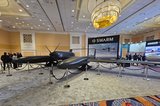
The Israeli Air Force operate nearly 100 F-16I jets. (Photo: IDF)
The $80-million contract for the development and installation of the Advanced Self-Protection Suite on the F-16I further boosts Israeli Air Forces’ (IAF’s) fleet survivability.


The Israel Ministry of Defense (IMoD) has awarded Elbit Systems a US$80-million contract for the development and installation of an advanced airborne self-protection suite on its F-16I Sufa fleet.
According to Elbit, the suite will include an electronic warfare (EW) solution, integrated with an advanced electro-optical passive missile warning and launch detection system as well as a chaff and flare dispensing system for protection against guided missiles.
These systems will enable “enhanced protection” from a variety of threats, the technology company added.
The deal is seen by the IMoD as helping to provide “production independence in Israeli defence industries and reduce dependency on external factors.
“This is to ensure the IDF’s qualitative military edge and support its current and future operational needs under all conditions.”
This award is one such recent contract Elbit has made with air forces in the last year to boost fleet survivability against electronic warfare threats. In 2024, it was awarded with US$175 million worth of contracts to supply an EW and directed infrared countermeasure self-protection suite to a NATO European country.
Israel operates 97 F-16I Sufa jets in its fleet, out of an ordered 102, which Lockheed Martin produced specifically for the country according to IAF requirements.
Related Equipment in Defence Insight



More from Air Warfare
-
![V-22 Osprey safety upgrade moves towards wider fleet installation under $35.5 million deal]()
V-22 Osprey safety upgrade moves towards wider fleet installation under $35.5 million deal
Bell Boeing will supply 73 additional ODSSHI kits as NAVAIR prepares to introduce predictive drive-system monitoring across US and Japanese V-22 fleets.
-
![AFA 2026: US Air Force examines uncrewed cargo aircraft for contested logistics]()
AFA 2026: US Air Force examines uncrewed cargo aircraft for contested logistics
The US Air Force is evaluating demonstrators for uncrewed cargo missions as it considers logistics requirements across the Pacific and other contested environments.
-
![Germany air focus: Europe’s leading near-term air market targets domestic industry]()
Germany air focus: Europe’s leading near-term air market targets domestic industry
Between 2026 and 2032, almost a quarter of EU aircraft spending is expected to come from Germany. While crewed programmes seek modernisation and replacement, uncrewed opportunities look to introduce entirely new capabilities, with both highlighting sovereignty and domestic production.
-
![Europe risks losing control of CUAS production capacity as manufacturers look abroad]()
Europe risks losing control of CUAS production capacity as manufacturers look abroad
European counter-drone developers are securing early orders in the Middle East while slow domestic acquisition processes threaten to redirect production capacity, expertise and investment away from Europe.
-
![India’s rotary-wing capability gap grows as IMRH programme delays persist]()
India’s rotary-wing capability gap grows as IMRH programme delays persist
With IMRH and DBMRH potentially years from service, India faces a widening rotary-wing capability gap that could drive further foreign purchases even as HAL and Safran build the foundations of an indigenous successor.
-
![AFA 2026: Swarm Aero eyes 2027 Gamera flight as Textron/Merlin reveal SkyCourier UX]()
AFA 2026: Swarm Aero eyes 2027 Gamera flight as Textron/Merlin reveal SkyCourier UX
Two new uncrewed aircraft concepts target very different US military requirements, from massed long-range strike to autonomous logistics. Shephard spoke with executives from Swarm Aero, Textron Aviation and Merlin Labs at this year's AFA Air, Space & Cyber conference to learn more about their capabilities.