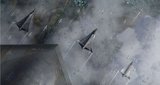
India tests Dhruvastra helicopter missile


India’s Defence Research and Development Organisation (DRDO) conducted three ground-based tests of its Nag/Helina helicopter-launched missile on 15-16 July in direct and top-attack modes. To be called the Dhruvastra by the Indian Air Force (IAF), the missile is slowly edging closer to induction.
More trials will be held jointly by the Indian Army and IAF by the end of the year for integration on the Rudra Advanced Light Helicopter (Weapon System Integrated) helicopter and followed by pre-production batches of the Light Combat Helicopter before 2021.
The 1.9m-long 45kg Dhruvastra has a range of 500m-7km. Eight missiles can be attached
Our news & analysis is now part of Defence Insight®
A Basic-level or higher Defence Insight subscription is now required to view this content.


More from Air Warfare
-
![AI-controlled F-16s advance towards autonomous multi-aircraft operations in US]()
AI-controlled F-16s advance towards autonomous multi-aircraft operations in US
The US plans to progressively expand VENOM/AIR testing from single-aircraft flights to multi-platform autonomous operations over the next 12–24 months, generating data that could support future US military AI programmes, including Collaborative Combat Aircraft.
-
![AIM-260 JATM deal puts Australia’s missile-industrial ambitions in focus]()
AIM-260 JATM deal puts Australia’s missile-industrial ambitions in focus
While a potentially accelerated acquisition timeline could strengthen the RAAF’s long-range air combat capability, Canberra’s continued reliance on US missile production is also put under the spotlight in parallel to its push to build a sovereign industry.
-
![Attack drones versus CUAS – the future of warfare or just another trend?]()
Attack drones versus CUAS – the future of warfare or just another trend?
Demand signals for counter-drone technology are strong and the market is becoming crowded, but is this really the beginning of a new phase of warfare or will commentators be talking about something else 10 years from now?