HYDIS² consortium hypersonic interceptor project proposed for funding by European Comission
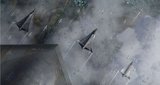
The HYDIS² consortium submitted a proposal for a concept architecture and technology maturation study of an endo-atmospheric interceptor. (Photo: MBDA)
The objective of HYDIS² is to study various interceptor concepts and bring to maturity the associated critical technologies to deliver the best counter-hypersonic and anti-ballistic interception solution.


A few months ago, the HYDIS² consortium submitted a proposal for a concept architecture and technology maturation study of an endo-atmospheric interceptor against new high-end emerging threats, in the framework of the European Defence Fund 2023 work programme.
On 12 July 2023, following a positive evaluation, the European Commission proposed the project for funding.
The consortium, coordinated by MBDA, proposed HYpersonic Defence Interceptor Study (HYDIS²), a project that brings together defence groups, institutions, SMEs and mid-caps and universities.
Related Articles
New material could be used for hypersonic missile radomes, MBDA
It gathers the best competencies in the domains of missiles from across the EU.
France, Germany, Italy and the Netherlands have already confirmed their support and commitment by signing a Letter of Intent (LoI) and agreeing on Initial Common Requirements.
The objective of HYDIS² is to study various interceptor concepts and bring to maturity the associated critical technologies to deliver the best counter-hypersonic and anti-ballistic interception solution that fulfils the four member states’ needs and addresses the needs of the European PESCO TWISTER capability programme.
The HYDIS² consortium brings together 19 partners and more than 20 subcontractors in 14 European countries. The partners are ArianeGroup, AVIO, Avio Aero, Bayern-Chemie, CIRA, DLR, GKN Fokker, Lynred, MBDA España, MBDA France, MBDA Germany, MBDA Italia, OHB System, ONERA, ROXEL France, Thales LAS France, TDW, Thales Netherlands and TNO.


More from Air Warfare
-
![AI-controlled F-16s advance towards autonomous multi-aircraft operations in US]()
AI-controlled F-16s advance towards autonomous multi-aircraft operations in US
The US plans to progressively expand VENOM/AIR testing from single-aircraft flights to multi-platform autonomous operations over the next 12–24 months, generating data that could support future US military AI programmes, including Collaborative Combat Aircraft.
-
![AIM-260 JATM deal puts Australia’s missile-industrial ambitions in focus]()
AIM-260 JATM deal puts Australia’s missile-industrial ambitions in focus
While a potentially accelerated acquisition timeline could strengthen the RAAF’s long-range air combat capability, Canberra’s continued reliance on US missile production is also put under the spotlight in parallel to its push to build a sovereign industry.
-
![Attack drones versus CUAS – the future of warfare or just another trend?]()
Attack drones versus CUAS – the future of warfare or just another trend?
Demand signals for counter-drone technology are strong and the market is becoming crowded, but is this really the beginning of a new phase of warfare or will commentators be talking about something else 10 years from now?