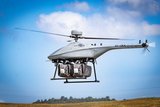
Hensoldt develops demonstrator SIGINT pod for Eurodrone
Hensoldt has already tested a communications intelligence demonstrator on a Learjet test aircraft. (Photo: GFD)
The company has already demonstrated its C-ESM capabilities in ground and flight tests.


Hensoldt is developing sensor equipment that can be integrated into a pod, giving the Eurodrone signals intelligence (SIGINT) capability.
The SIGINT technology will utilise digitation advancements, including electronic beam steering and metallic 3D printing, already used on the company’s Kalaetron product line.
A contract for implementation and testing of a SIGINT demonstrator worth €15 million ($16.3 million) has been awarded by the German BAAINBw procurement agency.
As part of the contract, Hensoldt is developing a system architecture for integrating SIGINT capability into the Eurodrone’s mission system.
Hensoldt Spectrum Dominance & Airborne Solutions Division head Christoph Ruffner said: ‘From our experience with other SIGINT projects and our own technology programmes, we are in a position to offer a flexible SIGINT solution for the Eurodrone that can be integrated into a pod, but can also be used networked with other platforms.’
The German Armed Forces already use the Kalaetron product family in self-protection and SIGINT systems.
Key elements of the system include a digitised broadband receiver, an electronically controllable antenna, and a condensed structure of electronic components.
Hensoldt said these combinations, in concert, allowed for SIGINT equipment to be integrated into a compact pod that can be easily deployed on flying platforms.
Related Programmes in Defence Insight
Related Equipment in Defence Insight



More from Air Warfare
-
![V-22 Osprey safety upgrade moves towards wider fleet installation under $35.5 million deal]()
V-22 Osprey safety upgrade moves towards wider fleet installation under $35.5 million deal
Bell Boeing will supply 73 additional ODSSHI kits as NAVAIR prepares to introduce predictive drive-system monitoring across US and Japanese V-22 fleets.
-
![AFA 2026: US Air Force examines uncrewed cargo aircraft for contested logistics]()
AFA 2026: US Air Force examines uncrewed cargo aircraft for contested logistics
The US Air Force is evaluating demonstrators for uncrewed cargo missions as it considers logistics requirements across the Pacific and other contested environments.
-
![Germany air focus: Europe’s leading near-term air market targets domestic industry]()
Germany air focus: Europe’s leading near-term air market targets domestic industry
Between 2026 and 2032, almost a quarter of EU aircraft spending is expected to come from Germany. While crewed programmes seek modernisation and replacement, uncrewed opportunities look to introduce entirely new capabilities, with both highlighting sovereignty and domestic production.
-
![Europe risks losing control of CUAS production capacity as manufacturers look abroad]()
Europe risks losing control of CUAS production capacity as manufacturers look abroad
European counter-drone developers are securing early orders in the Middle East while slow domestic acquisition processes threaten to redirect production capacity, expertise and investment away from Europe.
-
![India’s rotary-wing capability gap grows as IMRH programme delays persist]()
India’s rotary-wing capability gap grows as IMRH programme delays persist
With IMRH and DBMRH potentially years from service, India faces a widening rotary-wing capability gap that could drive further foreign purchases even as HAL and Safran build the foundations of an indigenous successor.