German military aviation authority certifies Heron TP UAS
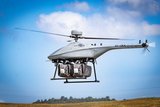
A German Heron TP in flight. (Photo: IAI)
The Heron TP is a strategic variant of IAI’s Heron family UAS, which includes the extensively used Heron 1.


The German Heron TP has been awarded a Type Certificate by the German Military Aviation Authority (GMAA).
The certification makes it the first UAV in service with the German Armed Forces to comply with an internationally agreed airworthiness code fully.
The Type Certificate confirms the UAV’s compliance with the STANAG 4671 military airworthiness standard.
Related Articles
Farnborough 2022: IAI developing Queen Elizabeth-class aircraft carrier-capable Heron UAS
IAI debuts compact lightweight electronic warfare package
German Armed Forces receives second Airbus A350-900
The German Heron TP is a German-Israeli project contracted to Airbus and Israel Aerospace Industries (IAI) for modification, production, and operation by the German Air Force.
IAI president and CEO Boaz Levy said the certificate award paved the way for Germany to operate the UAV worldwide.
IAI said the Type Certificate resulted from ‘years of intensive type certification effort’ by the prime contractor Airbus DS Airborne Solutions and IAI as the OEM.
Work included adaptations to multiple systems to meet compliance standards, the compilation and review of documents and tests.
Related Programmes in Defence Insight
German Heron TP (GHTP) (4-8) [Germany]
German Heron TP (GHTP) (1-3) [Germany]
Related Equipment in Defence Insight



More from Air Warfare
-
![V-22 Osprey safety upgrade moves towards wider fleet installation under $35.5 million deal]()
V-22 Osprey safety upgrade moves towards wider fleet installation under $35.5 million deal
Bell Boeing will supply 73 additional ODSSHI kits as NAVAIR prepares to introduce predictive drive-system monitoring across US and Japanese V-22 fleets.
-
![AFA 2026: US Air Force examines uncrewed cargo aircraft for contested logistics]()
AFA 2026: US Air Force examines uncrewed cargo aircraft for contested logistics
The US Air Force is evaluating demonstrators for uncrewed cargo missions as it considers logistics requirements across the Pacific and other contested environments.
-
![Germany air focus: Europe’s leading near-term air market targets domestic industry]()
Germany air focus: Europe’s leading near-term air market targets domestic industry
Between 2026 and 2032, almost a quarter of EU aircraft spending is expected to come from Germany. While crewed programmes seek modernisation and replacement, uncrewed opportunities look to introduce entirely new capabilities, with both highlighting sovereignty and domestic production.
-
![Europe risks losing control of CUAS production capacity as manufacturers look abroad]()
Europe risks losing control of CUAS production capacity as manufacturers look abroad
European counter-drone developers are securing early orders in the Middle East while slow domestic acquisition processes threaten to redirect production capacity, expertise and investment away from Europe.
-
![India’s rotary-wing capability gap grows as IMRH programme delays persist]()
India’s rotary-wing capability gap grows as IMRH programme delays persist
With IMRH and DBMRH potentially years from service, India faces a widening rotary-wing capability gap that could drive further foreign purchases even as HAL and Safran build the foundations of an indigenous successor.