Germany adds AI backbone to FCAS next-generation fighter jet
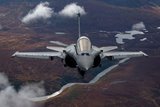
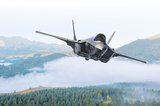
FCAS will incorporate an AI backbone developed by the HIS consortium. (Image: Airbus Defence & Space)
A consortium of Helsing and Rohde & Schwarz has been selected by the German BAAINBw defence procurement agency to deliver an artificial intelligence (AI) backbone for the Future Combat Air System (FCAS) sixth-generation fighter jet.


Germany’s Federal Office of Bundeswehr Equipment, Information Technology and In-Service Support (BAAINBw) has selected the HIS consortium of Helsing, Schönhofer Sales and Engineering (SSE) (a Rohde & Schwarz subsidiary) and IBM Deutschland to provide the AI infrastructure for FCAS.
BAAINBw signed a contract for provision of this software platform on 7 August with immediate effect.
National initiatives in Germany are running in parallel to the wider Franco-German-Spanish FCAS programme. The HIS consortium’s contract will run as part of the Next Generation Weapon System National Research and Technology project.
Related Articles
NGWS/FCAS sensor design effort receives green light
German industry teams up to develop sensors for FCAS fighter
Shield AI successfully demonstrates autonomous teaming with V-BAT UAS
To allow this key AI capability to be developed and deployed quickly, Germany has created a cross-functional platform as a development environment for all partners and pillars of FCAS.
‘AI plays a key role in conflicts with peer competitor adversaries,’ said Stephanie Lingemann, programme director at Helsing. ‘The AI backbone is the first step toward giving the air force cross-functional capabilities with AI; the FCAS programme is making progress, but this sort of infrastructure is crucial for every platform.’
Sandra Pfetzing-Huber, associate partner at IBM Consulting, added: ‘In order to develop and operate AI applications, a powerful and scalable IT infrastructure is required that is also secure. The Secure Cloud (VS-Cloud) from IBM and its partners Secunet and RedHat offers the scalability, flexibility, reliability and security to quickly and easily develop, operate and secure AI applications.’
The HIS AI backbone will allow high-performance AI to be developed for military applications, including complex industry collaboration, and deployment to the German armed forces.
An FCAS aircraft mock-up was unveiled at the Paris Air Show in June 2019. France and Germany are planning to spend an initial €4 billion ($4.5 billion) in the development phase by 2025, with half the total amount expected to be spent by Berlin. FCAS is due to be operational by 2040.
Related Programmes in Defence Insight


More from Air Warfare
-
![New US Army UH-60M Black Hawk order bridges uncertain path to MV-75 transition]()
New US Army UH-60M Black Hawk order bridges uncertain path to MV-75 transition
The US$234 million award for 16 Sikorsky UH-60Ms preserves near-term production, but funding uncertainty and an undefinitised contract leave the US Army’s long-term Black Hawk requirements unresolved.
-
![V-22 Osprey safety upgrade moves towards wider fleet installation under $35.5 million deal]()
V-22 Osprey safety upgrade moves towards wider fleet installation under $35.5 million deal
Bell Boeing will supply 73 additional ODSSHI kits as NAVAIR prepares to introduce predictive drive-system monitoring across US and Japanese V-22 fleets.
-
![AFA 2026: US Air Force examines uncrewed cargo aircraft for contested logistics]()
AFA 2026: US Air Force examines uncrewed cargo aircraft for contested logistics
The US Air Force is evaluating demonstrators for uncrewed cargo missions as it considers logistics requirements across the Pacific and other contested environments.
-
![Europe risks losing control of CUAS production capacity as manufacturers look abroad]()
Europe risks losing control of CUAS production capacity as manufacturers look abroad
European counter-drone developers are securing early orders in the Middle East while slow domestic acquisition processes threaten to redirect production capacity, expertise and investment away from Europe.