Eurofighter confirms Spain Halcon II contract conclusion and eyes 138 potential Typhoon exports
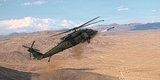
The Eurofighter Typhoon is in service with nine nations across Europe and the Middle East. (Photo: Crown Copyright/SAC Maryanna Williams RAF)
Current contract negotiations for the Eurofighter Typhoon aircraft come from three of its partner nations: Spain, Germany and Italy, while 73 aircraft are currently in production for Spain, Germany, Kuwait and Qatar.


Eurofighter has emphasised the strategic and economic importance of the Eurofighter Typhoon, discussing ongoing contract negotiations and potential export opportunities for the fighter.
Speaking at the International Fighter Conference, Defence iQ, Stephan Miegel, chief operating officer of the Eurofighter programme, said that contract negotiations with Spain for the production of a second batch of 25 aircraft, under the Halcon II programme, had concluded.
“We have finished contract negotiations with that one [Halcon II],” Miegel confirmed.
The purchase order for the procurement of 25 aircraft, first approved in September 2023, will replace the EF-18AM/BM Hornet currently in use with Ala 12 at
Our news & analysis is now part of Defence Insight®
A Basic-level or higher Defence Insight subscription is now required to view this content.


More from Air Warfare
-
![New US Army UH-60M Black Hawk order bridges uncertain path to MV-75 transition]()
New US Army UH-60M Black Hawk order bridges uncertain path to MV-75 transition
The US$234 million award for 16 Sikorsky UH-60Ms preserves near-term production, but funding uncertainty and an undefinitised contract leave the US Army’s long-term Black Hawk requirements unresolved.
-
![V-22 Osprey safety upgrade moves towards wider fleet installation under $35.5 million deal]()
V-22 Osprey safety upgrade moves towards wider fleet installation under $35.5 million deal
Bell Boeing will supply 73 additional ODSSHI kits as NAVAIR prepares to introduce predictive drive-system monitoring across US and Japanese V-22 fleets.
-
![AFA 2026: US Air Force examines uncrewed cargo aircraft for contested logistics]()
AFA 2026: US Air Force examines uncrewed cargo aircraft for contested logistics
The US Air Force is evaluating demonstrators for uncrewed cargo missions as it considers logistics requirements across the Pacific and other contested environments.
-
![Europe risks losing control of CUAS production capacity as manufacturers look abroad]()
Europe risks losing control of CUAS production capacity as manufacturers look abroad
European counter-drone developers are securing early orders in the Middle East while slow domestic acquisition processes threaten to redirect production capacity, expertise and investment away from Europe.