Data Link Solutions awarded a deal worth up to $1 billion for tactical radio systems
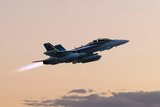
MIDS JTRS is to be fielded on F-15, F-16, F/A-18, and F-22 aircraft, as well as ship and C2 assets. (Image: BAE Systems)
The deal announced on 11 December was an indefinite delivery, indefinite quantity (ID/IQ) contract and the first task order of $116 million has already been awarded to provide terminals and spares, with follow-on production awards expected.


Data Link Solutions (DLS) will manufacture Multifunctional Information Distribution System Joint Tactical Radio Systems (MIDS JTRS) for a range of platforms under an ID/IQ deal with the US Navy (USN), worth up to US$1 billion.
DLS, a joint venture between BAE Systems and Raytheon, has already been awarded a first task order of US$116 million and includes continued production, retrofits, development, and sustainment of MIDS JTRS terminals for future growth.
MIDS JTRS provides situational awareness and enables Link 16 connectivity with jam-resistant, line-of-sight voice, video, and data communications for sea, ground, and air assets.
It is a four-channel software-defined radio designed to run the complex Link 16 waveform and up to three additional communication protocols. Link 16 is a standardized communications system used by NATO, the US and its allies to share real-time tactical data.
The Department of Defense is fielding MIDS JTRS on the F-15, F-16, F/A-18, and F-22 aircraft, as well as ship and command and control (C2) assets.
This contract combines purchases for the USN, US Air Force, US Army, and MIDS Program Office, as well as purchases for NATO nations under the Foreign Military Sales programme.
DLS is one of only two companies making MIDS JTRS, the other being L3Harris Technologies, which was last month also awarded an ID/IQ US$1 billion contract from the USN for the same systems.
Related Equipment in Defence Insight

You may also like

More from Air Warfare
-
![How India’s FCAS ambitions could reshape its combat-air roadmap]()
How India’s FCAS ambitions could reshape its combat-air roadmap
Participation in the French-led programme could provide India with access to sixth-generation technologies but force difficult choices over AMCA, TEDBF and indigenous propulsion development.
-
![Pentagon’s 800% PAC-3 MSE surge faces production bottleneck as Patriot demand soars]()
Pentagon’s 800% PAC-3 MSE surge faces production bottleneck as Patriot demand soars
The Pentagon wants to procure 3,203 PAC-3 MSE interceptors in FY2027, but production constraints and international demand could impact efforts to rebuild depleted missile stocks.
-
![AI-controlled F-16s advance towards autonomous multi-aircraft operations in US]()
AI-controlled F-16s advance towards autonomous multi-aircraft operations in US
The US plans to progressively expand VENOM/AIR testing from single-aircraft flights to multi-platform autonomous operations over the next 12–24 months, generating data that could support future US military AI programmes, including Collaborative Combat Aircraft.
-
![Canada targets 2028 operational debut for AIM-9X and AIM-120D missiles]()
Canada targets 2028 operational debut for AIM-9X and AIM-120D missiles
The missile programmes form part of a broader effort to strengthen Canadian air-combat readiness as the RCAF transitions from the CF-188 to the F-35A and rebuilds its operational weapons stocks.
-
![AIM-260 JATM deal puts Australia’s missile-industrial ambitions in focus]()
AIM-260 JATM deal puts Australia’s missile-industrial ambitions in focus
While a potentially accelerated acquisition timeline could strengthen the RAAF’s long-range air combat capability, Canberra’s continued reliance on US missile production is also put under the spotlight in parallel to its push to build a sovereign industry.
-
![Attack drones versus CUAS – the future of warfare or just another trend?]()
Attack drones versus CUAS – the future of warfare or just another trend?
Demand signals for counter-drone technology are strong and the market is becoming crowded, but is this really the beginning of a new phase of warfare or will commentators be talking about something else 10 years from now?