Boeing expresses optimism for ‘robust’ Asia-Pacific opportunities
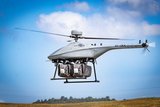
Insitu Pacific has the ScanEagle in the running for both army and navy competitions in Australia. (Gordon Arthur)
Boeing is bullish about the future of its aircraft, helicopters and UAVs in the Asia-Pacific region.


Boeing continues to eye opportunities for its helicopters, aircraft and UAVs in the Asia-Pacific region. For example, it is in the running for two Australian military UAV competitions.
Project Sea 129 Phase 5 Block 1 is seeking a shipborne UAV for the Royal Australian Navy (RAN), and the field has been narrowed to five platforms.
Boeing told Shephard: ‘We are responding to Sea 129 Phase 5 Block 1, and Insitu Pacific stands ready to meet the capability needs of Navy now and into the future with our local Australian supply chain and technology roadmap. The RfT for Sea
Our news & analysis is now part of Defence Insight®
A Basic-level or higher Defence Insight subscription is now required to view this content.

More from Air Warfare
-
![E-3 Sentry encryption equipment no longer meets US security requirements, says USAF]()
E-3 Sentry encryption equipment no longer meets US security requirements, says USAF
The US Air Force says the Sentry fleet’s DAR-400 encryptor can no longer keep pace with changing security requirements and warns that a failure could affect US operations and data security.
-
![Rafale AI trials highlight shift towards operational fighter testbeds]()
Rafale AI trials highlight shift towards operational fighter testbeds
Dassault’s latest Rafale trials join Gripen E and F-16 testing as developers explore how artificial intelligence could support and control combat aircraft.
-
![V-22 Osprey safety upgrade moves towards wider fleet installation under $35.5 million deal]()
V-22 Osprey safety upgrade moves towards wider fleet installation under $35.5 million deal
Bell Boeing will supply 73 additional ODSSHI kits as NAVAIR prepares to introduce predictive drive-system monitoring across US and Japanese V-22 fleets.
-
![AFA 2026: US Air Force examines uncrewed cargo aircraft for contested logistics]()
AFA 2026: US Air Force examines uncrewed cargo aircraft for contested logistics
The US Air Force is evaluating demonstrators for uncrewed cargo missions as it considers logistics requirements across the Pacific and other contested environments.